HOPE AND WAIT WITH PERSEVERANCE
“…if we hope for what we do not see, with perseverance we wait eagerly for it. (Rom 8,25)
A Pastoral Letter of the Archbishop of Caceres
On the Forthcoming Philippine Elections 2010
INTRODUCTION
As we celebrate the motherhood of Mary, we reflect on her faith and how her role in God’s plan. As the Mother of Christ, she is also the mother of the Church. Devotees of Our Lady of Peñafrancia know this by heart. Thus, we lovingly call her Ina.
It is indeed fitting that the solemnity of the Motherhood of Mary is celebrated on the first day of the year. Ina is our hope and our refuge. As we begin another year, we are filled with new hope because we know that our Ina continues to journey with us.
This year, the national and local elections also signal new hope. It is an opportunity for our people to express their will and to contribute in charting the country’s future. Indeed, democratic processes are meant to uphold the dignity of the people and to lead every person towards a significant participation in the community.
The technology of automation gives us reason to be optimistic that the election will reflect the people’s true will. We are hopeful that through this automation, fraud in the counting of votes will be appropriately addressed and minimized. By their vote, the people entrust the reins of government and their votes bear their hope for a better future.
But this hope for a better future needs to be coupled with a commitment to vote for leaders who will promote the common good. Elections emphasize the sovereignty of the people. To vote is not only a duty as citizens but as believers of Christ.
Every person, when casting his or her vote, makes a moral decision where the welfare of the people is at stake. The lives of the poor and marginalized, the pursuit of justice and peace, the progress and development of our country – they are shaped by the decisions made on election day.
Time and again, the Church has called upon the faithful to follow their conscience so they may cast a meaningful vote. The faithful must not allow the election to be a battle of campaign slogans and media exposure. The hope for new beginnings cannot be pinned on impressions but rooted in fortified conscience.
To follow one’s conscience requires enlightened conscience. It must be attended by a pursuit of truth, and a discernment of God’s message in concrete circumstances. When minds understand the realities of the present and when hearts are attuned to God’s will for all His children, the people’s vote can truly pave the way for a country where common good is the vocation of its leaders and where democracy leads to the integral development of the people.
It is therefore crucial for every faithful citizen to truly understand the political situation of our country.
The Political Landscape in the Philippines
In Rerum Novarum issued in 1891, the Church has denounced the concentration of power upon a small number of very rich men who “lay upon the laboring poor a yoke a little better than that of slavery itself.” (RN, 3) This aptly describes the evil of oligarchy.
Sadly, this situation persists in our country. Philippine politics has all the characteristics of an oligarchy.
Our country’s democracy is a mere semblance of real democracy. The basic freedoms seem to be present such as the freedom of speech, freedom of association and religious freedom. But the most important freedom – the freedom to be an empowered people – remains to be a dream. When the majority is not equipped with an empowering freedom, there can be no genuine participation from the people.
This empowering freedom is elusive because majority of Filipinos live below poverty line. There can be no government of the people, for the people, by the people if almost all Filipinos are poor. Poverty deprives our people the opportunity to develop their potentials, renders them incapable to participate in public affairs and denies them the primacy of the people in a democracy.
The rule of handful elite families negates democracy. Democracy and oligarchy cannot co-exist. The long-standing poverty of the majority of the people is a continuing result of oligarchy. This is evident in our provinces. The stronger the oligarchic powers in a locality, the poorer are the people.
The national and local governments are run by handful elite families of around 300 in the whole country. According to the latest Social System survey, only one percent of the total Philippine population belong to the ruling class that craft the social, political and economic life of the country. On the other hand, only 9% belong to the middle class while the great majority, 90% of the population, belong to the lower class.
The ruling class enjoys more than half of the nation’s wealth. They rule the country by provinces, congressional districts, cities and municipalities. Their hometowns are their political bailiwicks. They allocate political power unto themselves. The consequence: a proliferation of political dynasties and politicians clinging onto power either directly or indirectly.
Behold some of the striking features of an oligarchic politics:
Election Fraud and Violence. Illegal voter registration, intimidation and undue pressure of voters, vote buying and vote rigging (dagdag-bawas) are prevalent in both local and national elections. Election-related violence such as killings, kidnappings, physical attacks on rallies, homes, offices and vehicles of candidates and supporters are widespread. Intimidation, coercion and harassment usually precede the physical violence. Ruling families build up private armies and hire goons not only for protection but also for intimidating opponents. The Plaza Miranda Bombing in 1971, the murder of Evelio Javier in 1986, the murderous rivalry of the Espinosa’s and the Kho’s in Masbate are examples of the worsening election violence. On November 23, 2009, the world witnessed the worst election-related violence and it happened in Maguindanao..
Costly Campaigns. Campaigns become more expensive when competition becomes unduly intense, when economic stakes are high and when electorate continue to expand due to population growth. Tri-media advertisements are used not only during the campaign period but every single day. Personalities and celebrities are paid millions to endorse candidates as if the candidacy is a merchandize of consumer product. Vote-buying is given a sizable budget in any campaign, as if it were a legitimate expense. Campaigns are bankrolled by businessmen making candidates vulnerable to business interests at the expense of the common good. Heavy spending is done by the government to prop up administration candidates who seek re-election or election to other posts.
Political Turncoatism. Turncoatism or the switching from one party to another is another feature of Philippine politics. With the absence of marked differences in ideology, platforms and programs, shifting allegiances are commonplace. Political leaders easily jump from one party to another because their choices are centered on personalities rather than on platforms and programs. Factors considered are: party resources, winnability and networks. An ally can be an enemy the following day, not because of solid principles but only for political expediency and convenience. This indicates an absence of true ideals. Political parties are not institutions of ideologies and values but are mere machineries to facilitate campaign.
Quid Pro Quo Politics. What binds or unbinds our political leaders is quid pro quo politics. “Something for something.” Quid pro quo politics is also called transactional politics because governmental powers and authority are used for undeserved gain. Political leaders enter into arrangements with other politicians, deals that will benefit both of them. This exchange of favors is self-serving; it is detrimental to common good. Quid pro quo politics pollute the integrity of government institutions because checks and balances are undermined. These are instances when the chief executive exchanges favors with legislators. The examples are legion: scam in different branches of government, the circumvention of laws and the failure to prosecute graft and corrupt practices are abetted by quid pro quo politics. The fertilizer scams, the ZTE deal, the questionable creation of new congressional districts are but recent manifestations of this political culture among political leaders.
Extrajudicial Killings. Extrajudicial killings include “disappearances” where people are abducted, never heard from again and a body is never located. The killings’ desired impact is fear, paralysis and the breakdown of organizations that are vocal in its opposition and efficient in mobilizing public protest. Most of the victims are members of genuine party-list organizations such as Bayan Muna, Anak Pawis and Gabriela. The establishment of the party list system enabled sectoral groups to be represented in Congress. Their increased electoral success has posed a credible threat to the domination of the ruling class. According to Human Rights Watch, 110 members of party-list members have been killed in 2001 to 2006. In Bicol, students of Bicol University, Camarines Norte State College and Aquinas University have been killed in 2006 and 2007. Their killings have been linked to their membership with the League of Filipino Students.
Power Hoarding. Perpetuating one’s self in elective posts has been a tradition among many political leaders. Many incumbent politicians endorse bench warmers when they reach term limits. This way, they can easily reclaim their posts after three years. Others simply shift from the executive branch to the legislative branch such as from being governor to congressman or mayor to congressman and vice-versa.
HOPE IN THESE TROUBLED TIMES
The seemingly insurmountable issues of our political landscape have caused many Filipinos to focus on personal godliness and to distance from communal responsibility. Indeed, hopelessness has crept in and has weakened the Filipino spirit.
Our faith calls us to look upon the cross that redeems us. In Spe Salvi, Pope Benedict XVI said that to have faith is to hope. Jesus’ teachings represented a serious political challenge to the authorities of His day and for that, they crucified Him. But His faithfulness to the Father has revealed to us God’s perfect love. Accepting our responsibility towards our brothers and sisters is a public expression of our faith. To continue to hope for peace, justice and equality of human dignity is faithfulness to the Father’s will.
Hope for People Empowerment. Aristotle, in his book Politics, called democracy the best form of government. However, he pointed out that there can only be democracy where the majority comes from the middle class because virtue can only breed in people who are neither so rich nor so poor. The wide gap between the rich and the poor obstructs authentic democracy because a master and slave relationship reigns between the leaders and the citizens.
With a vast number of Filipinos, generation after generation, living under massive poverty and with the handful elite running the country, we must admit in humility that there is no genuine democracy. There is an urgent need to confront this truth so we can hope for the right kind of change.
To hope for democracy is to hope for the creation of a middle class. And the middle class can only be created when there is genuine people empowerment.
The middle class, as poetically described by PCP II, “is neither so poor that they have nothing to give nor so rich that they have nothing to receive.” But more than income and resources, the middle class is identified by their attitude towards and participation in society. The middle class has the means to be self-reliant and can break away from mendicancy or dependence from the ruling elite. The middle class is an empowered people who can positively influence the social, political and economic life of our nation.
Rerum Novarum affirms the dignity of the working class and defends the right to private property, to organize associations, to just wage and just working conditions, as well as the right to religious freedom. These rights must be respected to provide an environment conducive to people empowerment. Populorum Progressio affirms that authentic development must be complete, that is, it must promote the good of every person and of all humanity. Pope Paul VI beautifully stated that: “…there can be no complete development of individuals without the simultaneous development of all humanity in the spirit of solidarity.” (PP, 43) On helping the poor, he firmly commented: “You are not making a gift of your possessions to the poor person. You are handing over to him what is his. For what has been given in common for the use of all, you have arrogated to yourself. The world is given to all, and not only to the rich.” (PP, 23)
Therefore, I invite you to reflect together as ecclesial communities how you can contribute to people empowerment and the creation of the middle class through education, capital and ownership in the light of the Church’s social teachings.
Schools can expand scholarship programs as a concrete response. Educational institutions should include programs that will enhance special and competitive skills that can assist the poor to generate income to fend for their families. The culture of dependence can be at least minimized if the poor can find in themselves the capacity to conquer their own poverty. Schools must equip the poor to be creative so they may become productive citizens of society.
Those who are engaged in evangelization can uplift the dignity of the poor by making them aware of the nexus between poverty and political maturity and engaging them towards concrete actions that will integrate them into society. At the end of the day, evangelization cannot be complete when it is found only in motherhood statements. Jesus’ message is not limited to personal morality. The cross does not only look up and down at the morality of each individual human life, but also looks across the horizon of collective and social responsibilities of human lives. Evangelization must strengthen its prophetic voice and find relevance in the context of our people and the many issues that undermine human dignity.
Many government institutions remain silent about the right to private ownership, the reason why the people remain to be property-less. The right to shelter has been responded to by providing temporary dwelling, contingent upon the re-election of the incumbent and his allies. Through evangelization that teaches God’s will for an abundant life for His children, the poor will be led to an appreciation for the value of paying what is necessary to guarantee private ownership across generations. Payment in the form of blind loyalty or unreasonable debt of gratitude to the incumbent perpetuates patronage politics and holds hostage human dignity.
Those in the social development sector must endeavour to promote self-reliance among the poor. It has been proven that dole-outs breed dependence and subvert efforts to uphold the equal dignity of men. Social development programs must respond not only to the apparent needs of the community but must look into the structures that prevent authentic development. These programs must then provide venue for meaningful participation in the community, with the overarching goal to empower the people and assist them bring about their own advancement. Social development programs must aim to create an environment that will allow all men to fully develop and live as God’s children.
Civil society must assist in halting the vicious cycle of dependence by providing venues for people to associate and become more aware of the movements that impact their lives. Analysis of and understanding social, economic and political forces will help our people to position themselves against insults to their dignity. Filipinos must have the ability to distinguish between values and events that promote their empowerment and those that lure them into continued dependence. Only when we possess such clear distinction can we move towards true people power and democracy.
Hope for Social Justice. While people empowerment is an essential requisite for democracy, the virtue required to create and nourish democracy is social justice. The equal dignity of human persons necessisates the effort to reduce excessive social and economic inequalities.
Bridging the gap between the rich and poor, the powerful and the marginalized, the elite and the lower class – this is the essence of social justice.
As prescribed by Pope Pius XI in his encyclical Quadragessimo Anno, social justice is a virtue which requires personal responsibility to transform social institutions. This virtue calls for a commitment to social change. However, many social ills hinder the concern for our society. Among them are individualism, consumerism and materialism. These ills lead to the escalation of sinful inequalities.
When we are concerned only about our family’s welfare, when we accumulate material possessions excessively even if through legal means, when our lives are measured by the income and properties we acquire, we create greater inequality between rich and poor. To be socially just, we must stop caring only for ourselves and justifying our indifference by saying that after all, we do not step on another man’s shoes. We must begin looking at our lives as a member of our community.
The founding of the Kapatiran Party is evidence that there are among our lay faithful who are committed to their role as members of the Church in the society. In the Kapatiran Party, we find among our lay faithful a deep concern to restore integrity in politics and a sense of community among our people. This concern could only be inspired by their faith. Their participation in the 2010 elections may be an uphill battle but it is a concrete sign that the hope for social justice is alive.
Social justice, however, can only be fully realized if the state recognizes it, when the right social and economic order is established by the supreme authority in society. Without these structures, social justice is impossible in our country.
We need to examine the source of the discrimination of the poor and marginalized so social justice can be truly present as a feature of government. Through active engagement and solidarity, we can open new paths towards a society that respects the equal of the dignity of the rich and poor, the powerful and the marginalized. But we need to start with ourselves by asking how we can effect change.
Gaudium et Spes urges for civic and political formation so that all citizens can play their part in the life of the political community. All citizens, most especially the youth, must learn the art of politics to work for the common good and fight all forms of injustice and tyranny, as well as arbitrary domination by an individual or a political party. (GS, 75)
We need to build and enrich civil societies. Free associations guarantee the well-being of the society. Civil society must find a voice because when power is in the hands of a few although able and competent, social justice will not prevail.
Social justice as a virtue can be expressed in many ways. When we bring to the public forum the condemnation of prostitution, jueteng, illegal logging and quarrying; when we hold our political leaders accountable for graft and corrupt practices, lavish lifestyles and abuse of power; when we organize ourselves to protect religious rights, the integrity of families and the life of the unborn, every time we exercise our civil and political rights to perform our duty towards the common good, we practice social justice.
Social justice is charity that has matured and deepened as a public response to Jesus’ message. Charity does not end in providing material goods. It demands even the provision of conditions that will enable the people to obtain what is due them in the light of the Gospel.
I make this special appeal to the businessmen and entrepreneurs to look to higher values than profit. Quadragessimo Anno states that “Every effort must therefore be made that fathers of families receive a wage large enough to meet ordinary family needs adequately. But if this cannot always be done under existing circumstances, social justice demands that changes be introduced as soon as possible whereby such a wage will be assured to every adult workingman.” (GA, 71) Here, the Church has made the distinction between minimum wage and living wage.
I call upon the capitalists to aspire for profitability with genuine care for the welfare of their workers. “Business management cannot concern itself only with the interests of the proprietors, but must also assume responsibility for all the other stakeholders who contribute to the life of the business.” (CV, 40) True relevance of business undertakings is found in ensuring that the enterprise is a means to serve common good.
Hope for the Kingdom of God. When Pope Pius XI instituted the feast of Christ the King in 1925, he called upon Christians to recognize only one King and one Kingdom: Christ and God’s Kingdom. To mature in our faith, we must clearly distinguish between the kingdom of man and the kingdom of God. The exercise of rights, the lay faithful’s participation in the public square and partisan politics must not be motivated by patronage and subservience to any political leader in the building of human and personal kingdoms, but in the building of God’s kingdom on earth.
God invites us to His Kingdom, not only as a future reward but as a present reality. Far from the kingdom of men that hinges on authority and power, God’s kingdom is a kingdom of harmony and love. We seek God’s kingdom by responding to Jesus’ message, by orienting our lives to the Gospel. The Gospel calls us to search for the ways so God’s presence will be witnessed in the world.
As believers, it is our mission to fully understand the richness and beauty of His Kingdom and be fully engaged in building this kingdom on earth. All our efforts for people empowerment, all our struggles for social justice find fullness and meaning when they lead us to the kingdom of God.
To make present the kingdom of God, political leadership must be a means to serve the people, especially the poor. Leaders must be measured by their sacrifices for the welfare of the people. Wealth and material resources are mere tools so each person may serve the other. All human capacities are shared for the good of the community so God’s will can prevail.
In human and personal kingdoms, society is ruled by selfishness, dishonesty, distrust, and enmities. In this kingdom, man hoards power and wields it unjustly, as we can see in our present context. The greed for power and wealth in the midst of abject poverty, the relentless pursuit for self-gratification, the exploitation of institutions and disrespect for law - they persist because man prefers to create his own kingdom; and followers of this kingdom fail to see that this kingdom is nothing compared to God’s kingdom.
When our sight is not set on seeking the Kingdom of God, all our labours are designed upon our own individual self-centered will. The marginalized will continue to be disadvantaged, the poor will only become poorer and the oppressed will never find justice.
When we hope for a better future, for a better society, we hope for the kingdom of God and to see God’s light shine through. To establish His Kingdom, we must fully engage in investing on moral treasure and not material treasure, in restoring a social order that respects the primacy of human dignity and in building the moral well-being of our country.
To continuously engage in building God’s kingdom, we must be equipped with love. We become open to sacrifice, to deny our selfishness and pride, to decide for common good, when we are motivated by love. The just ordering of society can only be possible when we are filled with love for God and for our brothers and sisters. “Love is rich in intelligence and intelligence is full of love.” (CV, 30)
CONCLUSION
God so loved each and every one of us that He put us in a community. He calls us to be His people not as individuals, without bond or link, but by making us into a single people – His family. Our membership in His family demands a sense of responsibility for each other as brothers and sisters. Our aspiration of a better life is meaningless if it does not include that of our brothers and sisters. We cannot call it a better life if we are blind to the poverty and injustice all around us. But in the same breath, we must not surrender to the poverty and injustice just because they are systemic and deeply entrenched in our society. There are many opportunities to conquer them.
The coming elections can be a fresh start in our hope for a better future. But as any opportunity, we must be prepared to embark on the journey despite our fears and limitations, trusting that God, the source of all good, will not forsake us.
In order for the election to mark a new beginning, we must accord it with sincerity and understanding that the change of leaders does not mean a change of systems. We may elect new leaders but it does not guarantee an end to the scams and corruption. We must hope for the right change so genuine transformation can take place.
We need to create and strengthen the middle class before we can witness genuine democracy. Empowerment of the people is best reflected by a vibrant middle class that will move the country towards social justice. Imbued with a social conscience, the middle class will champion the equitable distribution of wealth, lead the collapse of oligarchy and advance social justice. The quest for social justice finds true motive, inspiration and fulfilment in building God’s kingdom on earth.
People empowerment and social justice is not a work of one man, or even one administration. It is the work of one people – the people of God – that are in different human institutions and sectors of society: in the family, the Church, the schools, the business sector and government.
By our baptism, we have been tasked a prophetic role: to see, judge and act. We must be vigilant at all times. We need to see and understand the long-standing suffering of our people. We must make judgments, not only opinions. We need to discern and identify the evil that has caused our society to continuously suffer. Finally, we must make a move.
We need to denounce the evil by making the kingdom of God present in our lives and in our institutions.
A keen understanding of the causes of our misery and a conviction to rise above it will equip us as we bring about the transformation that we truly need and deserve as a Filipino nation.
In Mary’s Magnificat, Ina echoes God’s promise of His Kingdom. It is a Kingdom where the poor are no longer powerless. It is a Kingdom where: “He has cast down the mighty from their thrones and has lifted up the lowly.” (Luke 1:52) Her Magnificat moves us to be a constituency of the kingdom of God and not of the kingdom of man.
Upon all I impart my New Year’s blessing.
+ LEONARDO Z. LEGASPI, O.P.,D.D.
Archbishop of Caceres
January 1, 2010
Tuesday, January 5, 2010

Friday, December 11, 2009
THE MAGUINDANAO MASSACRE: EVIL BEYOND ABOMINATION
BEYOND EVIL! In Maguindanao last November 23, 2009, a group on its way to COMELEC to file for candidacy in the 2010 elections was waylaid and ambushed, resulting in the brutal death of at least 57 people, many of them journalists and innocent civilians.
BEYOND BARBARIC! The murders were made even more abominable by the cruel acts inflicted upon the victims. Aside from suffering multiple gunshot and stab wounds, the breasts of the women victims were found to have been mutilated and their genitals riddled with bullet wounds.
BEYOND DESPICABLE! The crime committed is beyond heinous and is an abhorrent and brazen violation of the dignity of the human person! It has no place in human society! It loudly calls for the vehement condemnation by all -- Christians and non-Christians alike!
BENEATH CONTEMPT! The brutal murders done in the context of electoral politics seriously endanger our democracy and gravely threaten our democratic institutions! The insultingly insensitive and grossly irresponsible statement by no less than the Spokesperson of the President of the Philippines that the Palace – by reason of friendship - will remain supportive of the alleged perpetrators yet again demonstrate arrogance in Office and raises the specter of either complacency or connivance.L The use of Martial Law by the Highest Office as its way of response once more demonstrates its callous disregard for fundamental rights and utter lack of respect for the rule of law.
WE CALL ON ALL PEOPLE TO EXPRESS IN DEEPEST TERMS THEIR INDIGNATION AND CONDEMNATION OF THE MASSACRE AND ITS PERPETRATORS!
WE DEMAND FROM THE NATIONAL LEADERSHIP TO UPHOLD JUSTICE AND FUNDAMENTAL RIGHTS AND TO ZEALOUSLY APPLY THE RULE OF LAW IN THE IMMEDIATE APPREHENSION AND PROSECUTION OF ALL PERPETRATORS, REGARDLESS OF FRIENDSHIPS OR ALLIANCES.
WE CALL FOR THE SETTING UP OF PEACE CONSTITUTENCIES THAT WILL GUARD AGAINST AND CURTAIL VIOLENCE, ESPECIALLY IN THE UPCOMING 2010 ELECTIONS!
TOGETHER, LET US ALL WORK TOWARDS A COUNTRY THAT SINCERELY AFFIRMS HUMAN DIGNITY AND STRONGLY UPHOLDS HUMAN RIGHTS !
COMMITTEE ON SOCIO-POLITICAL EDUCATION, ADVOCACY and INVOLVEMENT
UNIVERSITY SOCIAL INVOLVEMENT COUNCIL
ATENEO DE NAGA UNIVERSITY
BEYOND BARBARIC! The murders were made even more abominable by the cruel acts inflicted upon the victims. Aside from suffering multiple gunshot and stab wounds, the breasts of the women victims were found to have been mutilated and their genitals riddled with bullet wounds.
BEYOND DESPICABLE! The crime committed is beyond heinous and is an abhorrent and brazen violation of the dignity of the human person! It has no place in human society! It loudly calls for the vehement condemnation by all -- Christians and non-Christians alike!
BENEATH CONTEMPT! The brutal murders done in the context of electoral politics seriously endanger our democracy and gravely threaten our democratic institutions! The insultingly insensitive and grossly irresponsible statement by no less than the Spokesperson of the President of the Philippines that the Palace – by reason of friendship - will remain supportive of the alleged perpetrators yet again demonstrate arrogance in Office and raises the specter of either complacency or connivance.L The use of Martial Law by the Highest Office as its way of response once more demonstrates its callous disregard for fundamental rights and utter lack of respect for the rule of law.
WE CALL ON ALL PEOPLE TO EXPRESS IN DEEPEST TERMS THEIR INDIGNATION AND CONDEMNATION OF THE MASSACRE AND ITS PERPETRATORS!
WE DEMAND FROM THE NATIONAL LEADERSHIP TO UPHOLD JUSTICE AND FUNDAMENTAL RIGHTS AND TO ZEALOUSLY APPLY THE RULE OF LAW IN THE IMMEDIATE APPREHENSION AND PROSECUTION OF ALL PERPETRATORS, REGARDLESS OF FRIENDSHIPS OR ALLIANCES.
WE CALL FOR THE SETTING UP OF PEACE CONSTITUTENCIES THAT WILL GUARD AGAINST AND CURTAIL VIOLENCE, ESPECIALLY IN THE UPCOMING 2010 ELECTIONS!
TOGETHER, LET US ALL WORK TOWARDS A COUNTRY THAT SINCERELY AFFIRMS HUMAN DIGNITY AND STRONGLY UPHOLDS HUMAN RIGHTS !
COMMITTEE ON SOCIO-POLITICAL EDUCATION, ADVOCACY and INVOLVEMENT
UNIVERSITY SOCIAL INVOLVEMENT COUNCIL
ATENEO DE NAGA UNIVERSITY
Thursday, December 10, 2009
Volunteers for Voters Education!
The ADNU Social Involvement Council conducted its first Trainers Training for Continuing Political Education last 5-6 December at the Villa Caceres Hotel,Naga City. The training was undertaken with the support of ADMU School of Government-Pugadlawin Project. The trainers included Michelle Avelino of ADMU, Mr. Ramon Beleno of the ADNU Social Sciences Department, and Mr. Renne Gumba of the ADNU Institute of Politics. The participants were selected faculty, personnel, and students of the ADNU (and some representatives from the ADNU partner communities).


Launching of Bicol Autonomy Movement and Signing of Draft Charter for Bicol Autonomous Region!
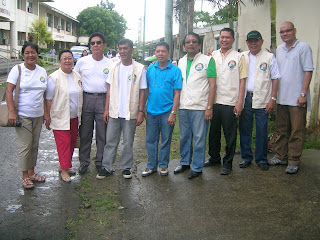
The Bicol Autonomy Movement was launched last 8 December 2009 at Daet, Camarines Norte. The event started with a motorcade/rally to the Cathedral wherein a Holy Mass was celebrated. The launching and charter signing ceremonies, conducted at the Bantayog ni Rizal, then followed.




Thursday, December 3, 2009
Vote for Peace 2010
Vote for Peace 2010
Statement on the Maguindanao Massacre
Vote for Peace 2010, a movement working for a political environment conducive to the conduct of a free, fair and peaceful elections, joins the Filipino people and the international community in condemning the senseless and gruesome mass killing of 57 innocent and defenseless civilians in the municipality of Ampatuan, Maguindanao province. Facts can be told about the incident but no words can exactly give description to the mass killings, what is clear is that the beastly carnage is a crime against humanity; an attack against press freedom and electoral democracy
Vote for Peace 2010 calls for the immediate arrests of all the principals and accessories to the crime, expedite the investigation and immediately prosecute the perpetrators so that justice to the victims be served:
While Datu Unsay Mayor Andal Ampatuan Jr. is already under the custody of police authority, we strongly criticized the government’s manner of negotiating with his family to turn him over instead of immediately arresting him. Thus, we strongly demand from the authorities that Maguindanao Governor Andal Ampatuan Sr. and ARMM Governor Zaldy Ampatuan should also be arrested immediately by being themselves suspects of the crime.
Others involved in the carnage should be pursued to the hilt. The officers and men of the PNP and AFP directly accountable to the breakdown of peace and order in the province should be suspended, relieved from their posts and investigated.
A Total Gun Ban should be implemented in the province. All civilian armed groups, whether private armed groups, civilian volunteer organizations and CAFGUS should be immediately dissolved and disarmed.
The CVOs and CAFGUs directly identified and working with the Ampatuans should be confined and investigated.
The State of Emergency declared for Maguindanao should be put under Comelec control and its assigned deputies for peace and order.
The 23rd of November 2009 will be long remembered not only as the worst outbreak of election violence in this country in memory but also the scale of the massacre and its sheer brutality. It is the most brutal manifestation of warlordism; a monstrous act against electoral democracy, and the worst loss of life in the history of journalism, ever. On this day, 57 people, mostly women of which two were pregnant were mercilessly killed. Thirty of the dead were journalists. The victims were bullet-riddled in the heads and private parts; a number of bodies were mutilated and a number of women-victims manifest signs of physical abuse. While a number of bodies were scattered that showed they were strafed to their sudden death, most were found piled one after another in hastily dug mass graves. There were also bodies inside the vehilces excavated from the mass grave. The fate of the victims this day was simply decided by the senseless scheme of the Ampatuans to thwart the victims’ convoy that passed Ampatuan town on their way to file the Certificate of Candidacy of Buluan Vice Mayor Esmael Mangudadatu for the governorship of Maguindanao. This was taken as a viled threat by the Ampatuans that ruled the province like their personal fiefdom since 2001.
The Maguindanao Massacre sums up the spate of political killings across the country in recent years. These clearly show the government’s inutility in the securing, if not total disregard, to the rule of law and human rights. The Arroyo administration can’t keep away its hands bloodied from the Maguindanao Massacre. In the first place, warlordism in Maguindanao once more became strong due to the nepotistic coddling to the Ampatuans.
The Maguindanao Massacre, on the other hand, is a martyrdom of the victims in their pursuit of electoral democracy and press freedom. The victims knew the dangerous route they will go through, (though they never, nor anyone expected the barbaric act of such scale and horror) yet they pursued what they believe is the right thing to do. We are full of anger, shame and indignation for what befell the victims. But for their act, we should also act, so that their death will not be in vain.
We should be more steadfast and vigilant than ever as we draw close to the 2010 elections. We should work with all citizens and election stakeholders for the strict enforcement of election and peace and order laws. Let us educate ourselves with the election offenses defined by the Constitution and the Omnibus Election Code and be vigilant against the abuses and opportunism of the government and candidates. Let us be aware, and help our countrymen understand that election violence is a consequence of too much partisan divide among voters; vote-buying and selling; patronage politics; proliferation of loose firearms and private armed groups; and election campaign overspending. We should call the AFP, PNP and NBI to strictly enforce the Total Gun Ban; regulating the security escorts of candidates and disarm and dismantle all private armed groups and militias. We should call on the COMELEC to declare early the critical election hotspot areas so that preventive measures against incidents of election violence be done.
Vote for Peace 2010
1 December 2009
www.votepeace.bantayeleksyon.org
For more information, please call Patrick I. Patino at tel. nos. (02)926-8340 or (02)433-0764.
Statement on the Maguindanao Massacre
Vote for Peace 2010, a movement working for a political environment conducive to the conduct of a free, fair and peaceful elections, joins the Filipino people and the international community in condemning the senseless and gruesome mass killing of 57 innocent and defenseless civilians in the municipality of Ampatuan, Maguindanao province. Facts can be told about the incident but no words can exactly give description to the mass killings, what is clear is that the beastly carnage is a crime against humanity; an attack against press freedom and electoral democracy
Vote for Peace 2010 calls for the immediate arrests of all the principals and accessories to the crime, expedite the investigation and immediately prosecute the perpetrators so that justice to the victims be served:
While Datu Unsay Mayor Andal Ampatuan Jr. is already under the custody of police authority, we strongly criticized the government’s manner of negotiating with his family to turn him over instead of immediately arresting him. Thus, we strongly demand from the authorities that Maguindanao Governor Andal Ampatuan Sr. and ARMM Governor Zaldy Ampatuan should also be arrested immediately by being themselves suspects of the crime.
Others involved in the carnage should be pursued to the hilt. The officers and men of the PNP and AFP directly accountable to the breakdown of peace and order in the province should be suspended, relieved from their posts and investigated.
A Total Gun Ban should be implemented in the province. All civilian armed groups, whether private armed groups, civilian volunteer organizations and CAFGUS should be immediately dissolved and disarmed.
The CVOs and CAFGUs directly identified and working with the Ampatuans should be confined and investigated.
The State of Emergency declared for Maguindanao should be put under Comelec control and its assigned deputies for peace and order.
The 23rd of November 2009 will be long remembered not only as the worst outbreak of election violence in this country in memory but also the scale of the massacre and its sheer brutality. It is the most brutal manifestation of warlordism; a monstrous act against electoral democracy, and the worst loss of life in the history of journalism, ever. On this day, 57 people, mostly women of which two were pregnant were mercilessly killed. Thirty of the dead were journalists. The victims were bullet-riddled in the heads and private parts; a number of bodies were mutilated and a number of women-victims manifest signs of physical abuse. While a number of bodies were scattered that showed they were strafed to their sudden death, most were found piled one after another in hastily dug mass graves. There were also bodies inside the vehilces excavated from the mass grave. The fate of the victims this day was simply decided by the senseless scheme of the Ampatuans to thwart the victims’ convoy that passed Ampatuan town on their way to file the Certificate of Candidacy of Buluan Vice Mayor Esmael Mangudadatu for the governorship of Maguindanao. This was taken as a viled threat by the Ampatuans that ruled the province like their personal fiefdom since 2001.
The Maguindanao Massacre sums up the spate of political killings across the country in recent years. These clearly show the government’s inutility in the securing, if not total disregard, to the rule of law and human rights. The Arroyo administration can’t keep away its hands bloodied from the Maguindanao Massacre. In the first place, warlordism in Maguindanao once more became strong due to the nepotistic coddling to the Ampatuans.
The Maguindanao Massacre, on the other hand, is a martyrdom of the victims in their pursuit of electoral democracy and press freedom. The victims knew the dangerous route they will go through, (though they never, nor anyone expected the barbaric act of such scale and horror) yet they pursued what they believe is the right thing to do. We are full of anger, shame and indignation for what befell the victims. But for their act, we should also act, so that their death will not be in vain.
We should be more steadfast and vigilant than ever as we draw close to the 2010 elections. We should work with all citizens and election stakeholders for the strict enforcement of election and peace and order laws. Let us educate ourselves with the election offenses defined by the Constitution and the Omnibus Election Code and be vigilant against the abuses and opportunism of the government and candidates. Let us be aware, and help our countrymen understand that election violence is a consequence of too much partisan divide among voters; vote-buying and selling; patronage politics; proliferation of loose firearms and private armed groups; and election campaign overspending. We should call the AFP, PNP and NBI to strictly enforce the Total Gun Ban; regulating the security escorts of candidates and disarm and dismantle all private armed groups and militias. We should call on the COMELEC to declare early the critical election hotspot areas so that preventive measures against incidents of election violence be done.
Vote for Peace 2010
1 December 2009
www.votepeace.bantayeleksyon.org
For more information, please call Patrick I. Patino at tel. nos. (02)926-8340 or (02)433-0764.
Wednesday, December 2, 2009
STATEMENT OF CONDEMNATION: MAGUINDANAO MASSACRE
Unacceptable!
In Maguindanao last November 23, a convoy of vehicles going to COMELEC to file for candidacy in the 2010 elections was waylaid and ambushed, resulting to the brutal death of at least 57 people, many of them journalists and innocent civilians.
Inhuman!
The ambush is worsened by the inhuman and barbaric acts inflected upon the victims. Aside from suffering multiple gunshot and stab wounds, the women’s breasts were allegedly mutilated and their genitals riddled with bullet wounds.
Despicable!
This is an abhorrent violation of the dignity of the human person! The crime is beyond heinous! Such act will never be acceptable to human society and must be vehemently condemned by both the Christian and non-Christian citizens of the world!
Deplorable!
The brutal killings done in the context of electoral politics endanger our democracy and its institutions! The perceived lack of passion for justice among several national government officials is extremely alarming, also raising the spectre of either complacency or connivance.
WE CALL ON ALL PEOPLE TO CONDEMN THE MASSACRE AND ITS PERPETRATORS!
WE CALL ON THE NATIONAL LEADERSHIP TO SHOW DECISIVENESS IN THE APPREHENSION AND PROSECUTION OF THE ALLEGED PERPETRATORS, EVEN IF THEY ARE LONG-TIME ALLIES OF THE INCUMBENT ADMINISTRATION!
WE CALL FOR THE SETTING UP OF PEACE CONSTITUTENCIES THAT WILL GUARD AGAINST ESCALATION OF VIOLENCE, ESPECIALLY IN THE UPCOMING 2010 ELECTIONS!
AFFIRM THE DIGNITY OF THE HUMAN PERSON: UPHOLD HUMAN RIGHTS!
CITIZENS ACT NOW: STRUGGLE FOR PEACE! FIGHT FOR JUSTICE!
INSTITUTE OF POLITICS
ATENEO DE NAGA UNIVERSITY
In Maguindanao last November 23, a convoy of vehicles going to COMELEC to file for candidacy in the 2010 elections was waylaid and ambushed, resulting to the brutal death of at least 57 people, many of them journalists and innocent civilians.
Inhuman!
The ambush is worsened by the inhuman and barbaric acts inflected upon the victims. Aside from suffering multiple gunshot and stab wounds, the women’s breasts were allegedly mutilated and their genitals riddled with bullet wounds.
Despicable!
This is an abhorrent violation of the dignity of the human person! The crime is beyond heinous! Such act will never be acceptable to human society and must be vehemently condemned by both the Christian and non-Christian citizens of the world!
Deplorable!
The brutal killings done in the context of electoral politics endanger our democracy and its institutions! The perceived lack of passion for justice among several national government officials is extremely alarming, also raising the spectre of either complacency or connivance.
WE CALL ON ALL PEOPLE TO CONDEMN THE MASSACRE AND ITS PERPETRATORS!
WE CALL ON THE NATIONAL LEADERSHIP TO SHOW DECISIVENESS IN THE APPREHENSION AND PROSECUTION OF THE ALLEGED PERPETRATORS, EVEN IF THEY ARE LONG-TIME ALLIES OF THE INCUMBENT ADMINISTRATION!
WE CALL FOR THE SETTING UP OF PEACE CONSTITUTENCIES THAT WILL GUARD AGAINST ESCALATION OF VIOLENCE, ESPECIALLY IN THE UPCOMING 2010 ELECTIONS!
AFFIRM THE DIGNITY OF THE HUMAN PERSON: UPHOLD HUMAN RIGHTS!
CITIZENS ACT NOW: STRUGGLE FOR PEACE! FIGHT FOR JUSTICE!
INSTITUTE OF POLITICS
ATENEO DE NAGA UNIVERSITY
Friday, November 27, 2009
Draft Charter for Autonomous Bicol Region
Drafting of the Bicol Charter continues today. At the moment, dedicated provincial coordinators (Albay, Camarines Sur, Camarines Norte, Catanduanes, Masbate, and Sorsogon)and the Secretariat of the Bicol Autonomy Movement are working in Legazpi City (and according to Nap Mangente, they may work until the wee hours of the morning!)to finalize the first version of the draft charter, which will be the basis for wider public consultations!
Mabuhay ang Bicolano!
Mabuhay ang Bicolano!
CONSORTIUM FOR ELECTORAL REFORMS
The Consortium for Electoral Reforms (CER)launched its VOTE PEACE Project, intended to set up a monitoring mechanism for election-related violence. A two-day training workshop is being conducted in the Imperial Suites, Quezon City to prepare partners for the formidable task.
"Strengthen democratic institutions, deepen our democracy!"
"Strengthen democratic institutions, deepen our democracy!"
Sunday, November 22, 2009

Friday, November 20, 2009
Movement for Bicol Autonomy!
JOIN THE BICOL AUTONOMY MOVEMENT! DRAFT CHARTER FOR AUTONOMOUS BICOL REGION IS BEING PREPARED! FORMAL LAUNCHING OF THE MOVEMENT DEC. 8, 2009. WILL POST OTHER DETAILS NEXT WEEK
Thursday, November 19, 2009
On the move!
We now have significant movements in the electoral arena. The administration party seems to be losing a lot of members while those who are allegedly in the opposition are getting more members!
It is an unfortunate sight! Those who assumed that their supposed allies are bound by principles and programs are now realizing that they are into an entirely new ballgame.
Those who spoke to the media about the unshakeable strength and power of a merged politcal party are now finding themselves humiliated.
Indeed, politicians are scampering for cover. After all, the most important thing at the moment is not anymore what (or how much)they receive today. Its about securing a place (and a hold to power) in the future.
And we have many turncoats hoping that joining the popular candidate/party will save their career in politics or in the bureaucracy.
It is an unfortunate sight! Those who assumed that their supposed allies are bound by principles and programs are now realizing that they are into an entirely new ballgame.
Those who spoke to the media about the unshakeable strength and power of a merged politcal party are now finding themselves humiliated.
Indeed, politicians are scampering for cover. After all, the most important thing at the moment is not anymore what (or how much)they receive today. Its about securing a place (and a hold to power) in the future.
And we have many turncoats hoping that joining the popular candidate/party will save their career in politics or in the bureaucracy.
Wednesday, November 18, 2009
SJSA National Colloquium
Katatapos lang ng Society of Jesus Social Apostolate(SJSA) Colloquium na ginawa 13-15 Nobyembre 2009 sa SEARSOLIN, Xavier University, Cagayan De Oro City.Nagkaroon ang grupo ng isang simpleng misa na pinangunahan ni Archbishop Tony Ledesma.


Saturday, November 14, 2009
2010 elections sa mata ng isang Atenista
Pinadala ng isang estudyante bilang ambag niya sa paghahanda nating lahat para sa eleksyon 2010:
Maraming salamat Neil! Mabuhay ka at ang mga kabataang tulad mo!
Maraming salamat Neil! Mabuhay ka at ang mga kabataang tulad mo!
SJSA NATIONAL COLLOQUIUM
The Society of Jesus Social Apostolate Network is having its 2nd Bi-Annual Colloquium 13-15 November 2009 at the SEARSOLIN, Xavier University, Cagayan De Oro City. Gathering with the theme "SAFEGUARDING 2010: ACTIVE ELECTORAL PARTICIPATION" are the Directors and Representatives of more than 30 institutions from all over the country - all partners of the Jesuits.
I gave the talk on POLED101:RE-FAMILIARIZING THE SJSA FRAMEWORK/POLITICAL FRAMING USING SJSA POSITION PAPERS. Here are some photos of the on-going conference:


I gave the talk on POLED101:RE-FAMILIARIZING THE SJSA FRAMEWORK/POLITICAL FRAMING USING SJSA POSITION PAPERS. Here are some photos of the on-going conference:


Peoples Development Agenda in Sorsogon City
It is a humbling experience facilitating the process and looking into the output of a multisectoral workshop in Sorsogon City, and trying to put into writing a development direction which will be jointloypursued by the city government, on one hand, and the non-government and peoples organizations on the other.
Below are some snapshots of the workshop conducted thru the initiative of PANGOPOD with the support of The Asia Foundation last 29-39 September 2009 at Jane's Restaurant, Sorsogon City:


Below are some snapshots of the workshop conducted thru the initiative of PANGOPOD with the support of The Asia Foundation last 29-39 September 2009 at Jane's Restaurant, Sorsogon City:


Saturday, August 22, 2009
FOR FREEDOM AND SOCIAL JUSTICE
The Friedrich Ebert Stiftung(FES) of Germany in partnership with the Ateneo de Naga University, with the Institute of Politics as the event host organization, will be launching “FOR FREEDOM AND SOCIAL JUSTICE: Social Democratic Political Platforms and Practical Politics since the Middle of the 19th Century” (An Exhibit on the History of the German Social Democratic Party) on 26 August – 2 September 2009 at the Fr. James O’Brien SJ Library, Ateneo de Naga University, Naga City, Philippines.
I sincerely believe that this activity will not only be a significant tool for political education, but also an opportunity to facilitate more vibrant political discussion in the locality. The various events that will be conducted aims to develop deeper understanding of the Philippine socio-politico-economic realities, and of expanding the appreciation of social democracy in the Philippine context.
I sincerely believe that this activity will not only be a significant tool for political education, but also an opportunity to facilitate more vibrant political discussion in the locality. The various events that will be conducted aims to develop deeper understanding of the Philippine socio-politico-economic realities, and of expanding the appreciation of social democracy in the Philippine context.
Wednesday, August 19, 2009
Launching of FES Exhibit in Discovery Suites, Ortigas

(with my friend Aaron)

(with Randy David and other guests)


Saturday, August 15, 2009
I DID NOT KNOW HER PERSONALLY, BUT…
I DID NOT KNOW HER PERSONALLY, BUT…
I did not know her personally. But I was fortunate enough to be around already when the 1st People Power took place. And I am sure then and now that I cannot distinguish one from the other: Cory led the People Power, and the People Power revolved around Cory’s courage.
She had demonstrated for us the type of leadership that strives for acceptance and legitimacy among the people.
Instead of relying on coercion usually enforced by armed groups, and manipulation observed in many patronage networks, she stood firmly and worked quietly for the restoration and strengthening of democracy and its institutions.
Instead of polarizing the armed forces, she pushed for social justice and empowerment.
Instead of manipulating government agencies for political gains, she implemented reforms in the bureaucracy.
Instead of endangering the electoral system, she gladly relinquished leadership to the next President.
I did not know her personally. But I will draw inspiration from her works and deeds. And at this point, I am sure many Filipinos are doing the same. Thus in her death, as in her life, she had awaken among us a sense of solidarity and pride for being Filipinos, Christians, and Catholics.
It is so easy to fall into the trappings of our everyday routine, and forget the fact that what we do (or do not do) ultimately defines the future that we create.
It is easy to say: “It is far away, why bother?” only to realize later on that we suffer the consequences of inaction, with our fellow Filipinos.
It is easy to babble about Philippine democracy as a concept, but difficult to realize that it is also a historical reality born out of the difficulties and sacrifices of earlier generations and must be consequently sustained and guarded by the present and future generations.
I did not know her personally. But she has touched my life not only as the leader of the country, but as a human being who struggles and grapples with the same everyday concerns of Filipinos. As a scholar, an activist, a widowed parent, and a woman, the various aspects of her life is a witnessing of her faith, fortitude, and courage.
To my mind CORY symbolized courage and strength that is not born from aggression and intimidation! She had shown us the kind of determination and unwavering commitment that comes from the heart and from the soul!
She also lived a life anchored on peace and non-violence, driven by the conviction that the path to unity and development is solidarity and respect for human dignity.
Most importantly, she has demonstrated that dignity, honor, and noble ideals are worth fighting for. In essence, her life has been a living testimony to the famous ideal espoused by her husband Ninoy: “The Filipino is worth dying for!”
I did not know her personally. But I will always remember her with fondness and gratitude.
Thank you Cory. (And Thank you Ninoy.)
In your life and in your death, (both of) you fought for the Filipinos in your unique, persistent, enduring ways.
I have never felt prouder about my being Pinoy, as I do right now!
Mabalos po.
Renne Gumba
4 July 2009
I did not know her personally. But I was fortunate enough to be around already when the 1st People Power took place. And I am sure then and now that I cannot distinguish one from the other: Cory led the People Power, and the People Power revolved around Cory’s courage.
She had demonstrated for us the type of leadership that strives for acceptance and legitimacy among the people.
Instead of relying on coercion usually enforced by armed groups, and manipulation observed in many patronage networks, she stood firmly and worked quietly for the restoration and strengthening of democracy and its institutions.
Instead of polarizing the armed forces, she pushed for social justice and empowerment.
Instead of manipulating government agencies for political gains, she implemented reforms in the bureaucracy.
Instead of endangering the electoral system, she gladly relinquished leadership to the next President.
I did not know her personally. But I will draw inspiration from her works and deeds. And at this point, I am sure many Filipinos are doing the same. Thus in her death, as in her life, she had awaken among us a sense of solidarity and pride for being Filipinos, Christians, and Catholics.
It is so easy to fall into the trappings of our everyday routine, and forget the fact that what we do (or do not do) ultimately defines the future that we create.
It is easy to say: “It is far away, why bother?” only to realize later on that we suffer the consequences of inaction, with our fellow Filipinos.
It is easy to babble about Philippine democracy as a concept, but difficult to realize that it is also a historical reality born out of the difficulties and sacrifices of earlier generations and must be consequently sustained and guarded by the present and future generations.
I did not know her personally. But she has touched my life not only as the leader of the country, but as a human being who struggles and grapples with the same everyday concerns of Filipinos. As a scholar, an activist, a widowed parent, and a woman, the various aspects of her life is a witnessing of her faith, fortitude, and courage.
To my mind CORY symbolized courage and strength that is not born from aggression and intimidation! She had shown us the kind of determination and unwavering commitment that comes from the heart and from the soul!
She also lived a life anchored on peace and non-violence, driven by the conviction that the path to unity and development is solidarity and respect for human dignity.
Most importantly, she has demonstrated that dignity, honor, and noble ideals are worth fighting for. In essence, her life has been a living testimony to the famous ideal espoused by her husband Ninoy: “The Filipino is worth dying for!”
I did not know her personally. But I will always remember her with fondness and gratitude.
Thank you Cory. (And Thank you Ninoy.)
In your life and in your death, (both of) you fought for the Filipinos in your unique, persistent, enduring ways.
I have never felt prouder about my being Pinoy, as I do right now!
Mabalos po.
Renne Gumba
4 July 2009
Monday, August 3, 2009
Requiem Mass and Prayer Vigil for President Cory
The Ateneo de Naga University community will hold a Requiem Mass and Prayer Vigil for the former President Cory Aquino 5:00pm, 4 August 2009 at the University Church.
Aside from the Ateneo community, the public is also invited to attend the said mass and vigil.
Aside from the Ateneo community, the public is also invited to attend the said mass and vigil.
Saturday, August 1, 2009
Good bye, Tita Cory!
I join the entire Filipino nation in praying for the eternal repose of former President Corazon Aquino. A political leader like her is a rare phenomenon in this country.
At the same time, I fervently pray that her ways and deeds, shown when she was still with us, will continue to unite the people and provide inspiration for greater achievements and enhanced nationhood!
Most importantly, democratization and empowerment continues to be a worthy cause in this country!
Good bye, Tita Cory. But to the proud Filipinos pursuing a life of dignity and honor, you will never really be gone.
At the same time, I fervently pray that her ways and deeds, shown when she was still with us, will continue to unite the people and provide inspiration for greater achievements and enhanced nationhood!
Most importantly, democratization and empowerment continues to be a worthy cause in this country!
Good bye, Tita Cory. But to the proud Filipinos pursuing a life of dignity and honor, you will never really be gone.
Monday, July 20, 2009
Consumer Forum in CASURECO 2 Area
Dear Fellow CASURECO 2 Consumers:
The member-consumers of the CAMARINES SUR 2 ELECTRIC COOPERATIVE (CASURECO 2) have been hearing and reading media reports about the brewing trouble in the electric cooperative. The management is having problems about positions and jurisdictions. The workers are having problems with their payrolls and compensation. Legal cases were filed by the affected parties in various courts, including the National Electrification Administration.
It will only be a matter of time before ordinary consumers like us are affected by this predicament of the electric cooperative. Along this line, the Metro Naga Consumers Group in partnership with other socio-civic organizations decided to pursue a bold initiative aimed at providing a venue for the articulation of consumers perceptions, sentiments, and recommendations. In this forum, we hope to:
1. Provide a venue for member-consumers to protect and assert their rights over the conduct and governance of the electric cooperative;
2. Provide a venue for CONSUMER-ORIENTED discussion of the issues and problems hounding CASURECO 2;
3. Provide a venue for generating consensus on consumer interventions and actions towards CASURECO 2.
Along this line, may we invite you and your organization to the CONSUMERS FORUM ON THE CASURECO 2 PREDICAMENT, 1:30PM, 31 JULY 2009, at the Naga City Youth Center, Civic Center Compound, Naga City. Please be advised that the forum is exclusively for ordinary consumers, thus excluding the participation of any CASURECO 2 officials or workers.
Thank you and we hope to see you and your group in the forum.
Metro Naga Consumer Group
Metro Naga Chamber of Commerce and Industry
Kapisanan ng mga Brodkaster sa Pilipinas-Cam. Sur Chapter
Naga City Peoples Council
ADNU Social Involvement Council
The member-consumers of the CAMARINES SUR 2 ELECTRIC COOPERATIVE (CASURECO 2) have been hearing and reading media reports about the brewing trouble in the electric cooperative. The management is having problems about positions and jurisdictions. The workers are having problems with their payrolls and compensation. Legal cases were filed by the affected parties in various courts, including the National Electrification Administration.
It will only be a matter of time before ordinary consumers like us are affected by this predicament of the electric cooperative. Along this line, the Metro Naga Consumers Group in partnership with other socio-civic organizations decided to pursue a bold initiative aimed at providing a venue for the articulation of consumers perceptions, sentiments, and recommendations. In this forum, we hope to:
1. Provide a venue for member-consumers to protect and assert their rights over the conduct and governance of the electric cooperative;
2. Provide a venue for CONSUMER-ORIENTED discussion of the issues and problems hounding CASURECO 2;
3. Provide a venue for generating consensus on consumer interventions and actions towards CASURECO 2.
Along this line, may we invite you and your organization to the CONSUMERS FORUM ON THE CASURECO 2 PREDICAMENT, 1:30PM, 31 JULY 2009, at the Naga City Youth Center, Civic Center Compound, Naga City. Please be advised that the forum is exclusively for ordinary consumers, thus excluding the participation of any CASURECO 2 officials or workers.
Thank you and we hope to see you and your group in the forum.
Metro Naga Consumer Group
Metro Naga Chamber of Commerce and Industry
Kapisanan ng mga Brodkaster sa Pilipinas-Cam. Sur Chapter
Naga City Peoples Council
ADNU Social Involvement Council
Tuesday, July 7, 2009
Bombs!
I was shocked when I saw the news yesterday about the bombing in the perimeter of the cathedral in Cotabato City. It killed five persons and wounded at least fifty others! As I have pointed out in previous blog entries, this act is becoming frequent and a pattern is emerging: the explosions are designed to sow terror among the public.
The military is quick to blame the MILF and its so-called “special operations group”, which the latter denied. In this situation, who is telling the truth, whom should the people believe? This query seems to b e the logical consequence of the unfolding events.
But a dimension that must be explored with equal interest is the question of the impact and consequences of such events. A patterned, systematic bombing gives the impression that there is an organized group capable of launching a national terror campaign. Further, it polarizes the country: the suspected bombers as the bad guys who must be chased down and the military as the good guys who must get these terrorists all cost. At the same time, it legitimizes the use of police powers by the state to protect public interest.
In any other context, this will be a widely acceptable move. But in a situation wherein democratic institutions’ legitimacy are quite low, these events tickle peoples imagination! One is reminded of the circumstances used by former President Marcos in declaring martial law then. Is it a strategy being employed by adventurist armed groups today?
Whatever is the emerging agenda in these bombings, violence is to be condemned and abhorred. Not only because it diminish the person’s dignity but also because it always hurts beyond the physical aspect. Violence is a total violation of the person.
Thus, as we condemn these bombings killing innocent persons we will also readily condemn any group who intends to use these events to legitimize further violence!
The military is quick to blame the MILF and its so-called “special operations group”, which the latter denied. In this situation, who is telling the truth, whom should the people believe? This query seems to b e the logical consequence of the unfolding events.
But a dimension that must be explored with equal interest is the question of the impact and consequences of such events. A patterned, systematic bombing gives the impression that there is an organized group capable of launching a national terror campaign. Further, it polarizes the country: the suspected bombers as the bad guys who must be chased down and the military as the good guys who must get these terrorists all cost. At the same time, it legitimizes the use of police powers by the state to protect public interest.
In any other context, this will be a widely acceptable move. But in a situation wherein democratic institutions’ legitimacy are quite low, these events tickle peoples imagination! One is reminded of the circumstances used by former President Marcos in declaring martial law then. Is it a strategy being employed by adventurist armed groups today?
Whatever is the emerging agenda in these bombings, violence is to be condemned and abhorred. Not only because it diminish the person’s dignity but also because it always hurts beyond the physical aspect. Violence is a total violation of the person.
Thus, as we condemn these bombings killing innocent persons we will also readily condemn any group who intends to use these events to legitimize further violence!
Saturday, July 4, 2009
The CASURECO 2 Predicament
The Metro Naga Consumer Group endorsed and supported the entry of Mons. Nono Sanado into the cooperative’s Board of Directors as a final gesture for fostering transparency and accountability to consumers by the coop management and workers. His entry was not easy, made more difficult by the political and economic interests at play in the electric cooperative. Fortunately, Mons. Sanado got the support of the majority of the Directors.
UNFORTUNATELY, the road to transparency and accountability is not an easy one. Legal and administrative cases have to be filed and refuted. Internal and external hindrances have to be confronted. Even sectors within the cooperative eventually ended up fighting each other, further deepening the factions within the organization.
As the cooperative reels from these difficulties, the central question remains: WHAT IS THE ROLE OF THE CONSUMERS? Some would say they are mere product purchasers with no actual influence in the management, production, and service delivery. Others say the consumers are merely individuals/corporate entities buying electricity from the cooperative. Others would assert that the consumers are the actual owners of the cooperative, although technically marginalized by the present set up!
If you are an individual consumer like me, you end up wondering about concrete experiences with the cooperative:
YOU ARE ASKED/REQUIRED TO:
a. pay membership fee
b. vote for Directors of the Cooperative
c. encouraged to attend the General Assembly as the highest policy making body of the cooperative
BUT YOU EXPERIENCE THAT:
a. you do not get any benefit from THAT membership aside from actually being allowed to purchase electricity
b. NEA (a government agency) directly supervises the cooperatives, with the BoD as an inferior entity
c. the cooperative is a corporation wherein the personnel remits their social security payments like private corporations do
This dilemmas actually run smack into some issues which the electric cooperative must be able to resolve: (1)Is it a cooperative or a corporation? (2)Is it owned by the members, by the government, or private individuals/corporations? These questions must be confronted by the consumers, particularly because the electric cooperatives are instruments for the delivery of a basic service industry: power.
I am convinced that the policy environment among electric cooperatives is ripe for adventurism among various political and economic interests, leaving the organization vulnerable to exploitation and manipulation.
May we therefore ask the consumers to take a stand: Do we claim ownership of our electric cooperative? Do we simply leave it open to various players dipping their fingers into the power industry?
Feel free to leave your comments here!
UNFORTUNATELY, the road to transparency and accountability is not an easy one. Legal and administrative cases have to be filed and refuted. Internal and external hindrances have to be confronted. Even sectors within the cooperative eventually ended up fighting each other, further deepening the factions within the organization.
As the cooperative reels from these difficulties, the central question remains: WHAT IS THE ROLE OF THE CONSUMERS? Some would say they are mere product purchasers with no actual influence in the management, production, and service delivery. Others say the consumers are merely individuals/corporate entities buying electricity from the cooperative. Others would assert that the consumers are the actual owners of the cooperative, although technically marginalized by the present set up!
If you are an individual consumer like me, you end up wondering about concrete experiences with the cooperative:
YOU ARE ASKED/REQUIRED TO:
a. pay membership fee
b. vote for Directors of the Cooperative
c. encouraged to attend the General Assembly as the highest policy making body of the cooperative
BUT YOU EXPERIENCE THAT:
a. you do not get any benefit from THAT membership aside from actually being allowed to purchase electricity
b. NEA (a government agency) directly supervises the cooperatives, with the BoD as an inferior entity
c. the cooperative is a corporation wherein the personnel remits their social security payments like private corporations do
This dilemmas actually run smack into some issues which the electric cooperative must be able to resolve: (1)Is it a cooperative or a corporation? (2)Is it owned by the members, by the government, or private individuals/corporations? These questions must be confronted by the consumers, particularly because the electric cooperatives are instruments for the delivery of a basic service industry: power.
I am convinced that the policy environment among electric cooperatives is ripe for adventurism among various political and economic interests, leaving the organization vulnerable to exploitation and manipulation.
May we therefore ask the consumers to take a stand: Do we claim ownership of our electric cooperative? Do we simply leave it open to various players dipping their fingers into the power industry?
Feel free to leave your comments here!
Thursday, July 2, 2009
Worst fear getting real!
I have always expressed apprehension over the tight schedule which COMELEC is working with as it tries to implement poll automation. Unfortunately, such apprehensions are slowly getting confirmed! A major hitch in the process is encountered by the “falling out” between the local and foreign partners of the consortium that won the bidding process.
I have also expressed the fear that if elections will not be credible, this will hasten the deterioration of our democratic institutions, encouraging adventurism among elements of the left and of the right. Indeed, we are now getting reports about coup d’etat and bombs planted and/or exploding in government offices.
This is not a very comforting scenario. I am convinced that vigilant citizens must start making the move, bonding towards a more decisive mobilization for the protection of our fragile democracy.
We will never bow down to authoritarianism. Nor will we be silenced by intimidation and coercion!
I have also expressed the fear that if elections will not be credible, this will hasten the deterioration of our democratic institutions, encouraging adventurism among elements of the left and of the right. Indeed, we are now getting reports about coup d’etat and bombs planted and/or exploding in government offices.
This is not a very comforting scenario. I am convinced that vigilant citizens must start making the move, bonding towards a more decisive mobilization for the protection of our fragile democracy.
We will never bow down to authoritarianism. Nor will we be silenced by intimidation and coercion!
Monday, June 29, 2009
2010 Jitters
As the election day draws nearer, those who are actively monitoring the preparations cannot help but feel some degree of apprehension. Are we going to be successfull in our poll automation efforts? Will election-related violence be avoided? Most importantly, will the entire process reflect the collective will of the majority
I have often heard people complaining about the blatantly outrageous overspending by some politicians on their propaganda machinery. Indeed, it has reached a scandalous level, even if these potential candidate are allegedly using their own private funds.
If money will continue to be the main factor , instead of competence and development programs/visions, in the electoral exercise perhaps we should introduce a radical change in the 1987 Philippine Constitution. Let us remove the provisions on elections. Instead, let us set up all elective positions for auctions/biddings! Those who can offer the highest price, or perhaps give every voter the highest amount, will get the position! That way, we avoid the messy electoral exercise and drop all pretensions of democratic ideals. Let us talk business and do business.
But of course, very few will agree to charter change before 2010 (a fact which majority of the congressmen/women prefers to ignore). Thus my proposal may have to wait after this 2010 elections. so we are back to where we started:
What will the 2010 elections do to us? Will it restore the peoples’ faith in our democratic institutions? Will it empower the marginalized? Or will it bring to the surface and simply legitimize a new ruling elite?
I have often heard people complaining about the blatantly outrageous overspending by some politicians on their propaganda machinery. Indeed, it has reached a scandalous level, even if these potential candidate are allegedly using their own private funds.
If money will continue to be the main factor , instead of competence and development programs/visions, in the electoral exercise perhaps we should introduce a radical change in the 1987 Philippine Constitution. Let us remove the provisions on elections. Instead, let us set up all elective positions for auctions/biddings! Those who can offer the highest price, or perhaps give every voter the highest amount, will get the position! That way, we avoid the messy electoral exercise and drop all pretensions of democratic ideals. Let us talk business and do business.
But of course, very few will agree to charter change before 2010 (a fact which majority of the congressmen/women prefers to ignore). Thus my proposal may have to wait after this 2010 elections. so we are back to where we started:
What will the 2010 elections do to us? Will it restore the peoples’ faith in our democratic institutions? Will it empower the marginalized? Or will it bring to the surface and simply legitimize a new ruling elite?
Thursday, June 25, 2009
Dear Friends:
Sharing with you the Ateneo de Naga University Statement against Constituent Assembly finalized and adopted in yesterday's Council of Administrators meeting. The statement was signed by majority of the university students, faculty, and personnel.
Salamat po.
In solidarity,
RENNE F. GUMBA
Executive Director
Institute of Politics (I.P.)
2F Administration Building
Ateneo de Naga University
4400 Naga City Philippines
Tel. (63-54) 4722368 local 2013
Fax (63-54) 4739253
----------------------------------------------
ATENEO DE NAGA UNIVERSITY
STATEMENT ON THE HOUSE OF REPRESENTATIVES
RESOLUTION 1109 CONVENING CONSTITUENT ASSEMBLY
In the darkness of night of June 2, 2009 the House of Representatives worked overtime. The majority passed Resolution 1109 against the valiant efforts of the minority to prevent its passage. Against the will of the majority of Filipinos, they resolved to convene a constituent assembly. They demonstrated why the majority of the Filipinos distrust Congress, and why, if the Constitution must be changed, they prefer a Constitutional Convention after 2010. In their resolution 1109, they betrayed the teeming masses they represent for the scheming machinations of Malacañang. We call on these congressmen and -women to return to representing their constituents and their consciences.
DO NOT BETRAY THE PEOPLE!
The House of Representatives, by resolving to convene itself into Constituent Assembly and to initiate charter change at this point, opens a Pandora’s box! Once convened, the Constituent Assembly may take up any agenda and make decisions, even without the consent of the people! Through the hurried passage of HR 1109, they initiated the move to amend the Constitution in a manner that lacks respect for and recognition of the duly established legal process. They junked the Senate. They betrayed the Constitution they vowed to protect and preserve. They manifested an utter disregard for genuine representation. They ceased to be our delegates, our trustees, and our representatives. Through such unprincipled action they have arrogated to themselves the authority that they are Constitutionally mandated to share with the Senate. They are not interested in reason, discussion, deliberation. They are interested in constitutional change through a sleight of hand, an intellectual chimera, a flawed argument, to strengthen the hold on power of the person in Malacanang, and to prevent any deliberation in the light.
DO NOT PLAY WITH FIRE!
Our country is imperiled by an economic situation that fails to respond to the driving poverty of our people, unmitigated corruption, declining trust and confidence in political leaders and institutions! A charter change process before the 2010 elections, that keeps charter change hostage to the interests of Malacañang, is dangerously divisive; it will fuel further adventurism among armed groups from the left and the right, and will awaken angry political action among large groups that have been content so far to be quiet. That quiet may be replaced by a willingness to fight and die in conscience for the good of the nation.
DO NOT PROVOKE TROUBLE!
In the spirit of strengthening our democratic institutions and retaining the fragile national unity that we are trying so hard to sustain, we strongly call on them to desist from pursuing Charter Change through a Constituent Assembly!
CEASE AND DESIST! STOP CON-ASS!
Sharing with you the Ateneo de Naga University Statement against Constituent Assembly finalized and adopted in yesterday's Council of Administrators meeting. The statement was signed by majority of the university students, faculty, and personnel.
Salamat po.
In solidarity,
RENNE F. GUMBA
Executive Director
Institute of Politics (I.P.)
2F Administration Building
Ateneo de Naga University
4400 Naga City Philippines
Tel. (63-54) 4722368 local 2013
Fax (63-54) 4739253
----------------------------------------------
ATENEO DE NAGA UNIVERSITY
STATEMENT ON THE HOUSE OF REPRESENTATIVES
RESOLUTION 1109 CONVENING CONSTITUENT ASSEMBLY
In the darkness of night of June 2, 2009 the House of Representatives worked overtime. The majority passed Resolution 1109 against the valiant efforts of the minority to prevent its passage. Against the will of the majority of Filipinos, they resolved to convene a constituent assembly. They demonstrated why the majority of the Filipinos distrust Congress, and why, if the Constitution must be changed, they prefer a Constitutional Convention after 2010. In their resolution 1109, they betrayed the teeming masses they represent for the scheming machinations of Malacañang. We call on these congressmen and -women to return to representing their constituents and their consciences.
DO NOT BETRAY THE PEOPLE!
The House of Representatives, by resolving to convene itself into Constituent Assembly and to initiate charter change at this point, opens a Pandora’s box! Once convened, the Constituent Assembly may take up any agenda and make decisions, even without the consent of the people! Through the hurried passage of HR 1109, they initiated the move to amend the Constitution in a manner that lacks respect for and recognition of the duly established legal process. They junked the Senate. They betrayed the Constitution they vowed to protect and preserve. They manifested an utter disregard for genuine representation. They ceased to be our delegates, our trustees, and our representatives. Through such unprincipled action they have arrogated to themselves the authority that they are Constitutionally mandated to share with the Senate. They are not interested in reason, discussion, deliberation. They are interested in constitutional change through a sleight of hand, an intellectual chimera, a flawed argument, to strengthen the hold on power of the person in Malacanang, and to prevent any deliberation in the light.
DO NOT PLAY WITH FIRE!
Our country is imperiled by an economic situation that fails to respond to the driving poverty of our people, unmitigated corruption, declining trust and confidence in political leaders and institutions! A charter change process before the 2010 elections, that keeps charter change hostage to the interests of Malacañang, is dangerously divisive; it will fuel further adventurism among armed groups from the left and the right, and will awaken angry political action among large groups that have been content so far to be quiet. That quiet may be replaced by a willingness to fight and die in conscience for the good of the nation.
DO NOT PROVOKE TROUBLE!
In the spirit of strengthening our democratic institutions and retaining the fragile national unity that we are trying so hard to sustain, we strongly call on them to desist from pursuing Charter Change through a Constituent Assembly!
CEASE AND DESIST! STOP CON-ASS!
Monday, June 22, 2009
Mga tugang kong Bikolano!
Mga tugang kong Bikolano:
Harani na po an 2010 elections. Sana nakaparehistro na kita gabos para
siguradong makaboto kita sa maabot na eleksyon.
Alagad afuera kan orolay sa eleksyon, naglataw naman ngonyan an kariribukan
tungkol sa charter change. Sa paagi kaining satuyang blogspot, tibaad pwede kitang
magbararetaan kan mga kalakawan asin mga plano manunungod digdi sa isyung ini.
Puonan ko:
1. Sa Ateneo de Naga University, naglalakaw na an pagpapirma para sa sarong
university statement na papaluwason kan unibersidad. Pag nagkataon, ini masentro
sa tulong aspeto: habo kami sa chacha before 2010; habo kami sa constituent
assembly; asin minasuporta kami sa pagkondusir kan 2010 elections!
2. May mga pigpaplanong paghiro digdi sa lokal. Saro kaiyan iyo an noise
barrage/motorcade sa june 27, alas-6 nin hapon. Su mga may auto, pig-iimbitaran
mi kamong magbali sa pagbusina asin pagribok laban sa con-ass chacha!
By the way, pwede man nindo akong makua sa http://groups.yahoo.com/group/tindogbikol/
Harani na po an 2010 elections. Sana nakaparehistro na kita gabos para
siguradong makaboto kita sa maabot na eleksyon.
Alagad afuera kan orolay sa eleksyon, naglataw naman ngonyan an kariribukan
tungkol sa charter change. Sa paagi kaining satuyang blogspot, tibaad pwede kitang
magbararetaan kan mga kalakawan asin mga plano manunungod digdi sa isyung ini.
Puonan ko:
1. Sa Ateneo de Naga University, naglalakaw na an pagpapirma para sa sarong
university statement na papaluwason kan unibersidad. Pag nagkataon, ini masentro
sa tulong aspeto: habo kami sa chacha before 2010; habo kami sa constituent
assembly; asin minasuporta kami sa pagkondusir kan 2010 elections!
2. May mga pigpaplanong paghiro digdi sa lokal. Saro kaiyan iyo an noise
barrage/motorcade sa june 27, alas-6 nin hapon. Su mga may auto, pig-iimbitaran
mi kamong magbali sa pagbusina asin pagribok laban sa con-ass chacha!
By the way, pwede man nindo akong makua sa http://groups.yahoo.com/group/tindogbikol/
Monday, June 8, 2009
KUMILOS KA!
Panawagan para sa pagkilos!
Ako ay mahigit isang dekada nang gumigitna sa kalye, lalo na kapag may usaping di kayang tugunan ng mga institusyon ng lipunan. Lalo na kapag ang huling takbuhan ay ang hukuman ng masa...ang pananaw at pandinig ng nakararaming mamamayan.
Mas tahimik sana kung ang mga hinaing ay kayang tugunan ng pamahalaan at mga ahensya nito. Matiwasay sana kung ang mga problema ay hindi galing sa administrasyon at sa mgas nakaupo sa puwesto.
Ngunit hanggat marami ang nasisilaw sa posisyon...sa kinang ng yaman...di matatapos ang gulo.
At dahil di maaaring ipagwalang-bahala ang gawaing ganito sa isang demokrasya, babangon at kikilos ang mga mamamayan. Sa gitna ng gulo, kanino ka kakampi...?!
KUMILOS KA! MANINDIGAN KA!
Ako ay mahigit isang dekada nang gumigitna sa kalye, lalo na kapag may usaping di kayang tugunan ng mga institusyon ng lipunan. Lalo na kapag ang huling takbuhan ay ang hukuman ng masa...ang pananaw at pandinig ng nakararaming mamamayan.
Mas tahimik sana kung ang mga hinaing ay kayang tugunan ng pamahalaan at mga ahensya nito. Matiwasay sana kung ang mga problema ay hindi galing sa administrasyon at sa mgas nakaupo sa puwesto.
Ngunit hanggat marami ang nasisilaw sa posisyon...sa kinang ng yaman...di matatapos ang gulo.
At dahil di maaaring ipagwalang-bahala ang gawaing ganito sa isang demokrasya, babangon at kikilos ang mga mamamayan. Sa gitna ng gulo, kanino ka kakampi...?!
KUMILOS KA! MANINDIGAN KA!
CHACHA EXPRESS?!
http://newsinfo.inquirer.net/breakingnews/nation/view/20090607-209257/Constituent-assembly-convenes-in-July
ARROYO ALLIES SAY--Constituent assembly convenes in July
Only SC can stop Charter change
By Villamor Visaya Jr., Vincent Cabreza
Inquirer Northern Luzon
First Posted 21:50:00 06/07/2009
Filed Under: Charter change, Politics, Elections, Eleksyon 2010,
Protest
BAGUIO CITY, Philippines -- President Gloria Macapagal-Arroyo’s allies
in the House of Representatives said they would convene a constituent
assembly to amend the Constitution without the Senate when Congress
reopens in July despite outrage by religious and civil society groups.
Baguio Representative Mauricio Domogan, one of the authors of House
Resolution 1109, which calls for a constituent assembly, said the
House would start the Charter change process upon the resumption of
Congress sessions in July by “inviting everyone” to form the
constituent assembly, including senators.
Domogan said the assembly would proceed even if senators refused to
cooperate and they would only stop if the high court stepped in to
rule on HR 1109’s constitutionality.
“We want the court to settle once and for all how to interpret the
provisions guiding Charter amendments so that the next Congress won’t
have to argue should they move to invoke this mode of amending the
Constitution,” Domogan said.
Domogan said on Sunday that administration lawmakers were aware that
they were taking a calculated risk in approving the measure before
adjourning the 14th session of Congress last week.
Nueva Ecija Representative Rodolfo Antonino said that the House
leadership was considering sending HR 1109 to individual senators, and
not the Senate as a body, for endorsement.
Antonino said that this would serve as an invitation to attend the
constituent assembly.
He said the constituent assembly would be convened a few weeks before
the President’s State of the Nation Address on July 27 in order to
create a “justiceable” cause for the Supreme Court to lay down a final
ruling on how should a constituent assembly be formed.
He said lawmakers were hoping that public outrage would provoke a
challenge in the Supreme Court on the House position that amendments
to the Constitution could be approved by three-fourths of the entire
membership of the two chambers voting jointly.
The 23-member Senate has opposed the move, but Arroyo allies expect to
overcome the upper chamber’s resistance with their sheer number in the
lower house.
House Majority Leader Arthur Defensor Sr. said: “I don’t believe the
House will convene without the Senate or at least majority of them
must signify their intention to attend.”
Otherwise, the Iloilo lawmaker said, this would put the House in bad
light.
Defensor said the call to convene a constituent assembly would be made
by Speaker Prospero Nograles, “but he will have to first get a
consensus of all leaders before making a declaration.”
A pastoral statement issued over the weekend by Jaro Archbishop Angel
Lagdameo, president of the Catholic Bishops’ Conference of the
Philippines, urged peaceful protests against HR 1109, but Domogan said
the Church action was “premature.”
“The final judge would be the Filipino people in a plebiscite that
[would] ratify whatever proposals that would be approved [by a
constituent assembly],” Domogan told reporters in Baguio.
Referring to criticism that Charter change was meant to prolong the
term of the President, which is will end next year, Domogan pointed
out that HR 1109 did not seek the extension of term limits of elective
officials.
In Isabela, Cabinet Secretary Silvestre Bello III said Malacañang was
respecting the principle of separation of powers and would not meddle
in Congress’ moves to change the Constitution.
But Bello said lawmakers should explain to the public their decision
in passing HR 1109.
“The people have the right to know the reason behind their action,” he
said. “The public must have an open mind regarding this resolution.”
Lawyer Oliver Lozano and his daughter on Wednesday went to the Supreme
Court to challenge HR 1109.
ARROYO ALLIES SAY--Constituent assembly convenes in July
Only SC can stop Charter change
By Villamor Visaya Jr., Vincent Cabreza
Inquirer Northern Luzon
First Posted 21:50:00 06/07/2009
Filed Under: Charter change, Politics, Elections, Eleksyon 2010,
Protest
BAGUIO CITY, Philippines -- President Gloria Macapagal-Arroyo’s allies
in the House of Representatives said they would convene a constituent
assembly to amend the Constitution without the Senate when Congress
reopens in July despite outrage by religious and civil society groups.
Baguio Representative Mauricio Domogan, one of the authors of House
Resolution 1109, which calls for a constituent assembly, said the
House would start the Charter change process upon the resumption of
Congress sessions in July by “inviting everyone” to form the
constituent assembly, including senators.
Domogan said the assembly would proceed even if senators refused to
cooperate and they would only stop if the high court stepped in to
rule on HR 1109’s constitutionality.
“We want the court to settle once and for all how to interpret the
provisions guiding Charter amendments so that the next Congress won’t
have to argue should they move to invoke this mode of amending the
Constitution,” Domogan said.
Domogan said on Sunday that administration lawmakers were aware that
they were taking a calculated risk in approving the measure before
adjourning the 14th session of Congress last week.
Nueva Ecija Representative Rodolfo Antonino said that the House
leadership was considering sending HR 1109 to individual senators, and
not the Senate as a body, for endorsement.
Antonino said that this would serve as an invitation to attend the
constituent assembly.
He said the constituent assembly would be convened a few weeks before
the President’s State of the Nation Address on July 27 in order to
create a “justiceable” cause for the Supreme Court to lay down a final
ruling on how should a constituent assembly be formed.
He said lawmakers were hoping that public outrage would provoke a
challenge in the Supreme Court on the House position that amendments
to the Constitution could be approved by three-fourths of the entire
membership of the two chambers voting jointly.
The 23-member Senate has opposed the move, but Arroyo allies expect to
overcome the upper chamber’s resistance with their sheer number in the
lower house.
House Majority Leader Arthur Defensor Sr. said: “I don’t believe the
House will convene without the Senate or at least majority of them
must signify their intention to attend.”
Otherwise, the Iloilo lawmaker said, this would put the House in bad
light.
Defensor said the call to convene a constituent assembly would be made
by Speaker Prospero Nograles, “but he will have to first get a
consensus of all leaders before making a declaration.”
A pastoral statement issued over the weekend by Jaro Archbishop Angel
Lagdameo, president of the Catholic Bishops’ Conference of the
Philippines, urged peaceful protests against HR 1109, but Domogan said
the Church action was “premature.”
“The final judge would be the Filipino people in a plebiscite that
[would] ratify whatever proposals that would be approved [by a
constituent assembly],” Domogan told reporters in Baguio.
Referring to criticism that Charter change was meant to prolong the
term of the President, which is will end next year, Domogan pointed
out that HR 1109 did not seek the extension of term limits of elective
officials.
In Isabela, Cabinet Secretary Silvestre Bello III said Malacañang was
respecting the principle of separation of powers and would not meddle
in Congress’ moves to change the Constitution.
But Bello said lawmakers should explain to the public their decision
in passing HR 1109.
“The people have the right to know the reason behind their action,” he
said. “The public must have an open mind regarding this resolution.”
Lawyer Oliver Lozano and his daughter on Wednesday went to the Supreme
Court to challenge HR 1109.
CHACHA EXPRESS?!
http://www.malaya.com.ph/jun08/news2.htm
Church threats won’t stop Cha-Cha, says Nograles
BY WENDELL VIGILIA
THE House leadership will not be deterred from amending the 1987
Constitution despite threats of mass protests from all sectors
especially the Catholic Church.
"Maybe we should remind them of the separation of Church and State,"
Speaker Prospero Nograles said yesterday.
In a pastoral statement Saturday, CBCP president archbishop Angel
Lagdameo called on those opposing Charter Change "to go on with their
plan of mobilization to protect the common good and national
interest."
The Archbishop of Jaro, however, appealed to the public to "express it
in a peaceful nonviolent way in order that we may not fall into the
trap that will necessitate martial law again."
Nograles also took a pot shot at Planning Secretary Ralph Recto’s
warning that the decision of the House to approve the Constituent
Assembly resolution will jeopardize the economy.
"Well, it’s the job of the economic managers to take care of the
economy and it’s the job of Congress to pass bills and resolutions by
voting in public and transparent manner. Secretary Recto did not make
that statement when we were proposing and debating the issue on
constitutional change. Why is it only now that he is warning us?" he
said.
"If the NEDA thinks that this could cause more shocks on the economy,
it is also therefore correct that the reason why our economy has been
suffering from shocks since most of us can remember is because of this
Cha-Cha issue," Nograles said.
"We have to find the answer now because otherwise, this cycle of
debate whether to Cha-Cha or not to Cha-cha will continue to have its
effects on the economy," he said.
Senate minority leader Aquilino Pimentel said Nograles should not to
waste his time reaching out to senators to support a Senate-less Con-
Ass.
Sen. Francis Escudero said Nograles’ attempt to persuade senators
should be on the premise that the House cannot do it without the
Senate. "Without that commitment, it would be useless to talk," he
said.
Sen. Mar Roxas said he is convinced that the 23 senators who signed a
resolution last year expressing their opposition on Cha-Cha would not
change their mind.
Sen. Alan Peter Cayetano said he has always believed Malacañang has
plans B, C, D, E… and so on to stay in power. "It is not a move by
congressmen and women of palaka (Partido Lakas-Kampi) alone. It has
PGMA’s blessings."
He cautioned the move of the House to talk to senators one by one
"must be taken seriously. This may be mind conditioning. Maybe they
have already the support of some senators."
Press Secretary Cerge Remonde assured that President Arroyo is not
seeking any elective position after 2010.
Reports said Arroyo might run for Congress in 2010, which could
entitle her to election as prime minister if she wins and joins
Congress.
"Hearsay lang iyan. Wala namang ebidensya na tatakbo siya," Remonde
said. – With JP Lopez and Jocelyn Montemayor
Church threats won’t stop Cha-Cha, says Nograles
BY WENDELL VIGILIA
THE House leadership will not be deterred from amending the 1987
Constitution despite threats of mass protests from all sectors
especially the Catholic Church.
"Maybe we should remind them of the separation of Church and State,"
Speaker Prospero Nograles said yesterday.
In a pastoral statement Saturday, CBCP president archbishop Angel
Lagdameo called on those opposing Charter Change "to go on with their
plan of mobilization to protect the common good and national
interest."
The Archbishop of Jaro, however, appealed to the public to "express it
in a peaceful nonviolent way in order that we may not fall into the
trap that will necessitate martial law again."
Nograles also took a pot shot at Planning Secretary Ralph Recto’s
warning that the decision of the House to approve the Constituent
Assembly resolution will jeopardize the economy.
"Well, it’s the job of the economic managers to take care of the
economy and it’s the job of Congress to pass bills and resolutions by
voting in public and transparent manner. Secretary Recto did not make
that statement when we were proposing and debating the issue on
constitutional change. Why is it only now that he is warning us?" he
said.
"If the NEDA thinks that this could cause more shocks on the economy,
it is also therefore correct that the reason why our economy has been
suffering from shocks since most of us can remember is because of this
Cha-Cha issue," Nograles said.
"We have to find the answer now because otherwise, this cycle of
debate whether to Cha-Cha or not to Cha-cha will continue to have its
effects on the economy," he said.
Senate minority leader Aquilino Pimentel said Nograles should not to
waste his time reaching out to senators to support a Senate-less Con-
Ass.
Sen. Francis Escudero said Nograles’ attempt to persuade senators
should be on the premise that the House cannot do it without the
Senate. "Without that commitment, it would be useless to talk," he
said.
Sen. Mar Roxas said he is convinced that the 23 senators who signed a
resolution last year expressing their opposition on Cha-Cha would not
change their mind.
Sen. Alan Peter Cayetano said he has always believed Malacañang has
plans B, C, D, E… and so on to stay in power. "It is not a move by
congressmen and women of palaka (Partido Lakas-Kampi) alone. It has
PGMA’s blessings."
He cautioned the move of the House to talk to senators one by one
"must be taken seriously. This may be mind conditioning. Maybe they
have already the support of some senators."
Press Secretary Cerge Remonde assured that President Arroyo is not
seeking any elective position after 2010.
Reports said Arroyo might run for Congress in 2010, which could
entitle her to election as prime minister if she wins and joins
Congress.
"Hearsay lang iyan. Wala namang ebidensya na tatakbo siya," Remonde
said. – With JP Lopez and Jocelyn Montemayor
Statement of PANDAYAN on the Assassination of Kahanay Rene Peñas
Statement of PANDAYAN on the Assassination of Kahanay Rene Peñas
June 8, 2009
PANDAYAN strongly condemns the violent and treacherous killing of Ka
Rene Peñas, 51 years old, the National Vice-President, Pambansang
Kilusan ng mga Samahang Magsasaka (PAKISAMA). PANDAYAN join other
groups to seek justice for our dear Kahanay, Ka Rene Peñas, and
express support and offer our prayers to his wife, Evangeline and his
children, Noland, Jerald, and Wopsyjenn.
Ka Rene was cowardly assassinated by unknown assailants last June 5,
2009, at around 11:00 PM while on his way to his farm in San Vicente,
Sumilao, Bukidnon, while riding a motorcycle with his two companions.
His two companions survived, but Ka Rene did not survive from the
eleven gunshot wounds.
How could an active non-violent advocate whose life was committed to
serving the landless and marginalized farmers killed in such a violent
manner?
As an active non-violent advocate, Ka Rene, in 1997, is one of the 28
farmers who held a hunger strike for agrarian reform. In 2007, he led
the 55 farmers for a 1,700- kilometer walk from Sumilao to Malacañang
for the government to cover the over 144-hectare ancestral land they
claim in Sumilao. In 2008, Ka Rene also led the Banasi farmers in
their 444-kilometer march from Bula to Malacañang, which successfully
reversed the adverse decision made by Malacañang. Ka Rene, once again,
became one of the figures leading hundreds of farmers pushing the
Philippine Congress for CARP Extension with Reform (CARPER).
Ka Rene’s efforts bore fruit as the Senate and the House of
Representatives start today, June 9, 2009, their bicameral discussion
of CARPER. We believe that he continues to witness the victory of the
farmers.
We shall continue to pay homage to Ka Rene by continuing his struggle
to attain an authentic agrarian reform. This is our highest tribute to
him and his family, and our greatest expression of gratitude for what
he has achieved as his contribution.
Justice to Kahanay Rene Peñas!
Justice to all victims of extrajudicial killings!
Justice to all farmers and the Filipino People!
Pandayan para sa Sosyalistang Pilipinas (PANDAYAN)
184 Maginhawa St., Sikatuna Village, Quezon City
Contact person: Boy Nuera / Roy Calfoforo
Contact number: Telefax: 436-6541, CP 0920-9021251
June 8, 2009
PANDAYAN strongly condemns the violent and treacherous killing of Ka
Rene Peñas, 51 years old, the National Vice-President, Pambansang
Kilusan ng mga Samahang Magsasaka (PAKISAMA). PANDAYAN join other
groups to seek justice for our dear Kahanay, Ka Rene Peñas, and
express support and offer our prayers to his wife, Evangeline and his
children, Noland, Jerald, and Wopsyjenn.
Ka Rene was cowardly assassinated by unknown assailants last June 5,
2009, at around 11:00 PM while on his way to his farm in San Vicente,
Sumilao, Bukidnon, while riding a motorcycle with his two companions.
His two companions survived, but Ka Rene did not survive from the
eleven gunshot wounds.
How could an active non-violent advocate whose life was committed to
serving the landless and marginalized farmers killed in such a violent
manner?
As an active non-violent advocate, Ka Rene, in 1997, is one of the 28
farmers who held a hunger strike for agrarian reform. In 2007, he led
the 55 farmers for a 1,700- kilometer walk from Sumilao to Malacañang
for the government to cover the over 144-hectare ancestral land they
claim in Sumilao. In 2008, Ka Rene also led the Banasi farmers in
their 444-kilometer march from Bula to Malacañang, which successfully
reversed the adverse decision made by Malacañang. Ka Rene, once again,
became one of the figures leading hundreds of farmers pushing the
Philippine Congress for CARP Extension with Reform (CARPER).
Ka Rene’s efforts bore fruit as the Senate and the House of
Representatives start today, June 9, 2009, their bicameral discussion
of CARPER. We believe that he continues to witness the victory of the
farmers.
We shall continue to pay homage to Ka Rene by continuing his struggle
to attain an authentic agrarian reform. This is our highest tribute to
him and his family, and our greatest expression of gratitude for what
he has achieved as his contribution.
Justice to Kahanay Rene Peñas!
Justice to all victims of extrajudicial killings!
Justice to all farmers and the Filipino People!
Pandayan para sa Sosyalistang Pilipinas (PANDAYAN)
184 Maginhawa St., Sikatuna Village, Quezon City
Contact person: Boy Nuera / Roy Calfoforo
Contact number: Telefax: 436-6541, CP 0920-9021251
PAKISAMA Statement
PAKISAMA Statement on the Assassination of Renato Penas,
National Vice-President,
Pambansang Kilusan ng mga Samahang Magsasaka
June 6, 2009
PAKISAMA condemns in strongest possible terms the dastardly and cowardly assassination of our leader, Renato Penas (51) last night, around 11 P.M., while on his motorcycle with two companions to his farm in San Vicente, Sumilao, Bukidnon.
While his companions survived, the assassins made sure Ka Rene would not. Crawling after the first volley of fire, he was shot again, and three shotgun bullets fatally pierced his chest and back.
Who could have caused the death of a man whose life was dedicated to serving the landless farmers?
A participant in a 1997 28-day hunger strike for land and a practicioner of active non-violence, Ka Rene rose to be one of the most prominent PAKISAMA leaders over the past two years. As a trained community organizer-paralegal , he led in 2007, the unprecedented but successful 1,700- kilometer walk of 55 farmers from Sumilao to Malacanang to make their claim over a 144-hectare ancestral land covered by the CARP. He figured in 2008 as the organizer-trainer of the successful 444-kilometer Banasi farmers walk from Bula to Malacanang, which reversed earlier adverse decision of Malacanang. During the past two months, Ka Rene was leading farmer groups coming from different persuasions, in a coalition campaign to push Congress to enact the extension and reform of CARP ( CARPER).
On May 30, he went home and was jubilant to learn that CARPER was finally passed by both houses of Congress and would soon be passed into law. But he was not given the opportunity by his assailants to see the fruit of his work.
We demand a speedy and objective investigation of this case. We ask the Arroyo government to demonstrate dispatch and professionalism in solving this crime.
We mourn with the widow and four orphans of Ka Rene and demand an end to the culture of impunity pervading in our society. We pray that Ka Rene would be the last among our leaders to be assassinated. We hope his case would not suffer the fate of two of our colleagues. On November 22, 2009, two hooded men gunned down our former Vice-President for Mindanao Vic Paglinawan in Davao City. On March 9, 2009, Boy Billames, Secretary-General of SAMATIKU, a member-farmer federation in South Cotabato was also gunned down by a hooded assassin. Until now, no suspects have been identified and caught in both crimes.
We call on the Filipino farmers to close ranks and transform to inspiration and courage the martyrdom of our leaders.
Let us continue the fight for agrarian reform and good governance and politics until every farmer owns the land s/he tills, until every citizen is not harmed while peacefully claiming his or her rights.
Justice to Ka Rene Penas!
Justice to all victims of extrajudicial killings!
Justice to all farmers and the Filipino People!
National Vice-President,
Pambansang Kilusan ng mga Samahang Magsasaka
June 6, 2009
PAKISAMA condemns in strongest possible terms the dastardly and cowardly assassination of our leader, Renato Penas (51) last night, around 11 P.M., while on his motorcycle with two companions to his farm in San Vicente, Sumilao, Bukidnon.
While his companions survived, the assassins made sure Ka Rene would not. Crawling after the first volley of fire, he was shot again, and three shotgun bullets fatally pierced his chest and back.
Who could have caused the death of a man whose life was dedicated to serving the landless farmers?
A participant in a 1997 28-day hunger strike for land and a practicioner of active non-violence, Ka Rene rose to be one of the most prominent PAKISAMA leaders over the past two years. As a trained community organizer-paralegal , he led in 2007, the unprecedented but successful 1,700- kilometer walk of 55 farmers from Sumilao to Malacanang to make their claim over a 144-hectare ancestral land covered by the CARP. He figured in 2008 as the organizer-trainer of the successful 444-kilometer Banasi farmers walk from Bula to Malacanang, which reversed earlier adverse decision of Malacanang. During the past two months, Ka Rene was leading farmer groups coming from different persuasions, in a coalition campaign to push Congress to enact the extension and reform of CARP ( CARPER).
On May 30, he went home and was jubilant to learn that CARPER was finally passed by both houses of Congress and would soon be passed into law. But he was not given the opportunity by his assailants to see the fruit of his work.
We demand a speedy and objective investigation of this case. We ask the Arroyo government to demonstrate dispatch and professionalism in solving this crime.
We mourn with the widow and four orphans of Ka Rene and demand an end to the culture of impunity pervading in our society. We pray that Ka Rene would be the last among our leaders to be assassinated. We hope his case would not suffer the fate of two of our colleagues. On November 22, 2009, two hooded men gunned down our former Vice-President for Mindanao Vic Paglinawan in Davao City. On March 9, 2009, Boy Billames, Secretary-General of SAMATIKU, a member-farmer federation in South Cotabato was also gunned down by a hooded assassin. Until now, no suspects have been identified and caught in both crimes.
We call on the Filipino farmers to close ranks and transform to inspiration and courage the martyrdom of our leaders.
Let us continue the fight for agrarian reform and good governance and politics until every farmer owns the land s/he tills, until every citizen is not harmed while peacefully claiming his or her rights.
Justice to Ka Rene Penas!
Justice to all victims of extrajudicial killings!
Justice to all farmers and the Filipino People!
Wednesday, June 3, 2009
CONASS RESOLUTION PASSED BY CONGRESS
MASAYA NA SANA AKO DAHIL PARANG MATUTULOY NAMAN ATA ANG AUTOMATION PROCESS. KAYA LANG, IPINASA NAMAN KAGABI NG KONGRESO ANG RESOLUTION PARA BAGUHIN ANG KONSTITUSYON SA PAMAMAGITAN NG CONSTITUENT ASSEMBLY! HAAYYY, BUHAY SA PINAS!
http://newsinfo.inquirer.net/breakingnews/nation/view/20090602-208506/-House-approves-constituent-assembly
House approves constituent assembly
By Lira Dalangin-Fernandez
INQUIRER.net
First Posted 23:32:00 06/02/2009
Filed Under: Charter change, Politics
MANILA, Philippines – Debates dragged for hours but it took only a few
seconds for the House of Representatives to approve a resolution that
would convene Congress into a constituent assembly to amend the 1987
Constitution.
With the “ayes” registering a louder vote than the “nays,” the House
of Representatives late Tuesday approved House Resolution 1109
convening Congress into a constituent assembly to amend the 1987
Constitution.
Even as all the interpellators have yet to speak, Shariff Kabunsuan
with Cotabato City Representative Didagen Dilangalen made a motion to
stop the interpellation period and go on voting. This was immediately
seconded and approved.
Members of the minority registered their objection.
Nueva Vizcaya Representative Carlos Padilla said the country witnessed
a "simple tyranny of the majority" and called the chamber "the worst
Congress in the annals of Philippine history."
“I believe in democracy, but this tyranny,” South Cotabato
Representative Darlene Antonino-Custodio said.
"Have we no shame? Let us stop this farce immediately," Bukidnon
Representative Teofisto Guingona III said.
“We oppose this, this charade… Let us amend the Constitution after the
term of President Arroyo. That is the time to amend the Constitution
of the Philippines. The best way to amend the Constitution is by
constitutional convention,” said former Speaker and Pangasinan
Representative Jose de Venecia Jr.
With the passage Nueva Ecija Representative Eduardo Nonato Joson
likened the country to a woman fighting off a rapist, saying “Huwag po
kuya [Please don’t, sir].”
“Let us not gang rape our Constitution,” he said.
Bayan Muna party list Representative Teodoro Casiño said one of the
sponsors of the resolution had admitted on the floor that the "whereas
clause" in the resolution that prohibits the term extension of the
incumbent president and vice president, senators, congressmen, mayors
and other elected officials whose term will expire in 2010, and that
there would be elections in 2010 was "not binding."
Gabriela partylist Representative Liza Maza asked one of the sponsors,
Cavite Representative Elpidio Barzaga Jr., it was possible under the
resolution to postpone the 2010 elections.
"Everything is possible, but it depends on the sound judgment of our
colleagues," Barzaga said.
La Union Representative Victor Ortega also echoed the same view,
saying that they would rely on "trust" basis in implementing the
“whereas clause.”
Parañaque Representative Roilo Golez said the majority pledged to have
an exhaustive discussion in plenary of the resolution.
"If we cannot trust them [majority] on this very small pledge, how can
the people trust the members of this Congress as constituent
assembly," Golez said.
Representative Luz Ilagan of Gabriela party list called the
proceedings a "night of ignominy" where the administration allies once
again used their numbers to push their agenda.
Quezon Representative Lorenzo Tañada III said he voted against the
resolution because Congress does not need to pass one in its use of
its inherent legislative powers. He added he is also against the
"crass" manifestation that the House alone can act in amending the
Constituion without engaging the Senate.
Proponents of the measure are in quandary if the House can convene as
an assembly on its own. Several lawmakers, including those form the
majority bloc, said that the Senate should be part of the process of
the constituent assembly.
“It always takes two to dance the Cha cha,” Cebu Representative Pablo
Garcia said during the earlier part of the debates.
By his interpretation, Garcia said HR 1109 was “just an invitation to
both Houses to convene in order to propose amendments to or revise the
Constitution.”
La Union Representative Victor Ortega, chairman of the committee on
constitutional amendments, echoed that the Senate could not be ignored
in the process of convening a constituent assembly.
Camarines Sur Representative Luis Villafuerte said he drafted the
resolution, but Speaker Prospero Nograles was its main author.
Villafuerte had withdrawn his signature to the resolution, saying that
there was no more time to rewrite the Constitution with barely a year
to go before the May 2010 elections.
“I have withdrawn my signature and I’m not supporting this resolution
anymore,” Vilalfuerte said, noting that “there’s a group in the
majority that’s undermining the resolution they are sponsoring.”
Minority Leader Ronaldo Zamora questioned the haste with which it was
being discussed in plenary, with only two session days left and with
other key legislation pending for passage.
“Why the short cut? Why not go for the long haul, for the harder
route? Why not eschew the easy path and make the amendments to the
Constitution as important as the role of the committee on
constitutional amendments?” Zamora said.
In the resolution, it was interpreted that voting should be done upon
the three-fourths of “all the members of Congress, not three-fourths
of each House voting separately.”
Proponents of this measure had hoped that this would prompt someone to
question it before the Supreme Court, so that the tribunal could
decide whether voting by the two chambers of Congress should be done
jointly or separately.
“So what is the point of all of this, if there is no justiciable
controversy… if you agree with me that the Senate is part of the
process?” Zamora said.
Proponents of the measure are still in quandary if the House can
convene as an assembly on its own. Several lawmakers, including those
form the majority bloc, said that the Senate should be part of the
process of the constituent assembly.
Earlier in the day, administration allies vowed to use their numbers
to have HR 1109 approved on Tuesday’s session and will study the
option if the House could convene into a constituent assembly even
without the Senate.
Interviewed after presiding over a caucus of the majority, Nograles
said the bloc would pass HR 1109 and then study their next moves.
“After we pass it we will have to study our next moves, study, legal
(study),” he said.
Taking up the constituent assembly resolution was one of the
agreements within the merged Lakas-Kampi-CMD party, despite the
withdrawal of support of Villafuerte, who recently resigned as Kampi
president.
President Gloria Macapagal-Arroyo is aware of the plan of the
congressmen, the Speaker said.
“Of course, I will not deny that the President just listened, she did
not say anything, bahala kayo [It’s up to you],” he added.
The constituent assembly resolution was approved in an emergency
meeting of the committee on constitutional amendments Monday so it
could be referred to the rules committee for floor deliberation
Tuesday.
Nograles said HR 1109 would be taken up first before House Resolution
737, which seeks specific amendments to the economic provisions of the
Constitution, because it only needed the vote by a majority while the
latter resolution required three-fourths vote of all members of
Congress since it was introducing specific amendments.
As to the Comprehensive Agrarian Reform Program (CARP) extension,
Nograles acknowledged that the pressure was now on the House after the
Senate passed it on third reading Monday night.
He said the House just received a copy of the 78-page document and was
still studying it.
“The options are basically two: first, is the easier option to adopt
their version and it’s finished. The second is to make another version
and go on bicam [bicameral committee meetings] over the holidays,”
Nograles said.
http://newsinfo.inquirer.net/breakingnews/nation/view/20090602-208506/-House-approves-constituent-assembly
House approves constituent assembly
By Lira Dalangin-Fernandez
INQUIRER.net
First Posted 23:32:00 06/02/2009
Filed Under: Charter change, Politics
MANILA, Philippines – Debates dragged for hours but it took only a few
seconds for the House of Representatives to approve a resolution that
would convene Congress into a constituent assembly to amend the 1987
Constitution.
With the “ayes” registering a louder vote than the “nays,” the House
of Representatives late Tuesday approved House Resolution 1109
convening Congress into a constituent assembly to amend the 1987
Constitution.
Even as all the interpellators have yet to speak, Shariff Kabunsuan
with Cotabato City Representative Didagen Dilangalen made a motion to
stop the interpellation period and go on voting. This was immediately
seconded and approved.
Members of the minority registered their objection.
Nueva Vizcaya Representative Carlos Padilla said the country witnessed
a "simple tyranny of the majority" and called the chamber "the worst
Congress in the annals of Philippine history."
“I believe in democracy, but this tyranny,” South Cotabato
Representative Darlene Antonino-Custodio said.
"Have we no shame? Let us stop this farce immediately," Bukidnon
Representative Teofisto Guingona III said.
“We oppose this, this charade… Let us amend the Constitution after the
term of President Arroyo. That is the time to amend the Constitution
of the Philippines. The best way to amend the Constitution is by
constitutional convention,” said former Speaker and Pangasinan
Representative Jose de Venecia Jr.
With the passage Nueva Ecija Representative Eduardo Nonato Joson
likened the country to a woman fighting off a rapist, saying “Huwag po
kuya [Please don’t, sir].”
“Let us not gang rape our Constitution,” he said.
Bayan Muna party list Representative Teodoro Casiño said one of the
sponsors of the resolution had admitted on the floor that the "whereas
clause" in the resolution that prohibits the term extension of the
incumbent president and vice president, senators, congressmen, mayors
and other elected officials whose term will expire in 2010, and that
there would be elections in 2010 was "not binding."
Gabriela partylist Representative Liza Maza asked one of the sponsors,
Cavite Representative Elpidio Barzaga Jr., it was possible under the
resolution to postpone the 2010 elections.
"Everything is possible, but it depends on the sound judgment of our
colleagues," Barzaga said.
La Union Representative Victor Ortega also echoed the same view,
saying that they would rely on "trust" basis in implementing the
“whereas clause.”
Parañaque Representative Roilo Golez said the majority pledged to have
an exhaustive discussion in plenary of the resolution.
"If we cannot trust them [majority] on this very small pledge, how can
the people trust the members of this Congress as constituent
assembly," Golez said.
Representative Luz Ilagan of Gabriela party list called the
proceedings a "night of ignominy" where the administration allies once
again used their numbers to push their agenda.
Quezon Representative Lorenzo Tañada III said he voted against the
resolution because Congress does not need to pass one in its use of
its inherent legislative powers. He added he is also against the
"crass" manifestation that the House alone can act in amending the
Constituion without engaging the Senate.
Proponents of the measure are in quandary if the House can convene as
an assembly on its own. Several lawmakers, including those form the
majority bloc, said that the Senate should be part of the process of
the constituent assembly.
“It always takes two to dance the Cha cha,” Cebu Representative Pablo
Garcia said during the earlier part of the debates.
By his interpretation, Garcia said HR 1109 was “just an invitation to
both Houses to convene in order to propose amendments to or revise the
Constitution.”
La Union Representative Victor Ortega, chairman of the committee on
constitutional amendments, echoed that the Senate could not be ignored
in the process of convening a constituent assembly.
Camarines Sur Representative Luis Villafuerte said he drafted the
resolution, but Speaker Prospero Nograles was its main author.
Villafuerte had withdrawn his signature to the resolution, saying that
there was no more time to rewrite the Constitution with barely a year
to go before the May 2010 elections.
“I have withdrawn my signature and I’m not supporting this resolution
anymore,” Vilalfuerte said, noting that “there’s a group in the
majority that’s undermining the resolution they are sponsoring.”
Minority Leader Ronaldo Zamora questioned the haste with which it was
being discussed in plenary, with only two session days left and with
other key legislation pending for passage.
“Why the short cut? Why not go for the long haul, for the harder
route? Why not eschew the easy path and make the amendments to the
Constitution as important as the role of the committee on
constitutional amendments?” Zamora said.
In the resolution, it was interpreted that voting should be done upon
the three-fourths of “all the members of Congress, not three-fourths
of each House voting separately.”
Proponents of this measure had hoped that this would prompt someone to
question it before the Supreme Court, so that the tribunal could
decide whether voting by the two chambers of Congress should be done
jointly or separately.
“So what is the point of all of this, if there is no justiciable
controversy… if you agree with me that the Senate is part of the
process?” Zamora said.
Proponents of the measure are still in quandary if the House can
convene as an assembly on its own. Several lawmakers, including those
form the majority bloc, said that the Senate should be part of the
process of the constituent assembly.
Earlier in the day, administration allies vowed to use their numbers
to have HR 1109 approved on Tuesday’s session and will study the
option if the House could convene into a constituent assembly even
without the Senate.
Interviewed after presiding over a caucus of the majority, Nograles
said the bloc would pass HR 1109 and then study their next moves.
“After we pass it we will have to study our next moves, study, legal
(study),” he said.
Taking up the constituent assembly resolution was one of the
agreements within the merged Lakas-Kampi-CMD party, despite the
withdrawal of support of Villafuerte, who recently resigned as Kampi
president.
President Gloria Macapagal-Arroyo is aware of the plan of the
congressmen, the Speaker said.
“Of course, I will not deny that the President just listened, she did
not say anything, bahala kayo [It’s up to you],” he added.
The constituent assembly resolution was approved in an emergency
meeting of the committee on constitutional amendments Monday so it
could be referred to the rules committee for floor deliberation
Tuesday.
Nograles said HR 1109 would be taken up first before House Resolution
737, which seeks specific amendments to the economic provisions of the
Constitution, because it only needed the vote by a majority while the
latter resolution required three-fourths vote of all members of
Congress since it was introducing specific amendments.
As to the Comprehensive Agrarian Reform Program (CARP) extension,
Nograles acknowledged that the pressure was now on the House after the
Senate passed it on third reading Monday night.
He said the House just received a copy of the 78-page document and was
still studying it.
“The options are basically two: first, is the easier option to adopt
their version and it’s finished. The second is to make another version
and go on bicam [bicameral committee meetings] over the holidays,”
Nograles said.
Subscribe to:
Posts (Atom)